- Details
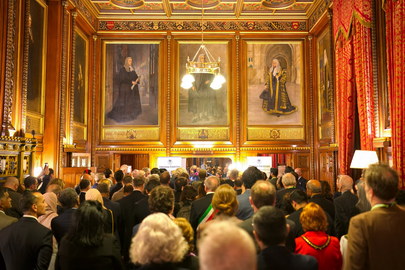
The recent Westminster reception in Parliament marked an important milestone for the Freedom Fountain project. Bringing together parliamentarians, historians, community leaders, and supporters, the event launched a wider national conversation about remembrance, education, and the responsibility to tell stories that have too often gone unheard. The project aims to create a national monument honouring the more than four million soldiers of the United British Indian Army who served during the First and Second World Wars.
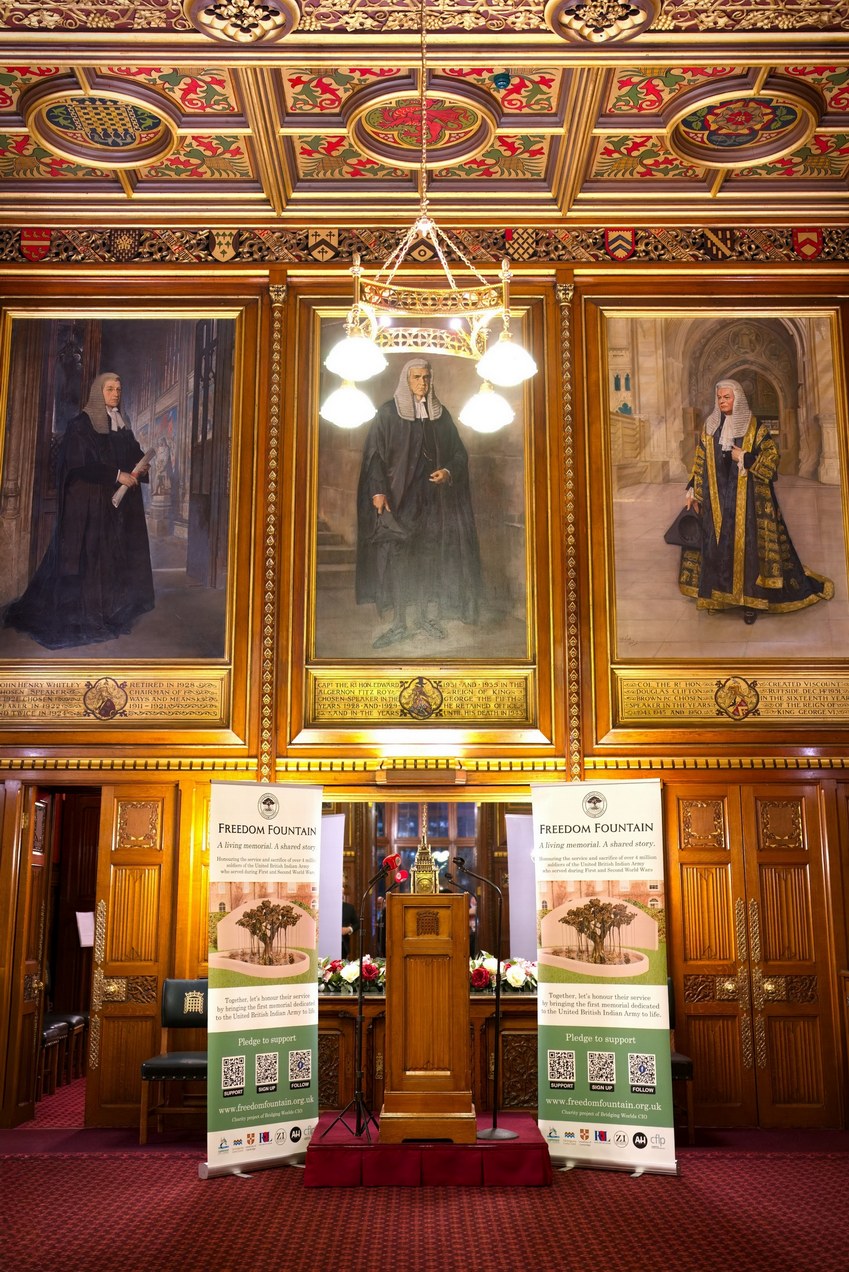
Held in Parliament, the Westminster gathering brought together an exceptional mix of attendees: people influential in charities and the wider sphere of remembrance and memory, alongside representatives from government and public life. What stood out most was the breadth of support in the room — and the sense that this story matters across communities, generations, and political lines.
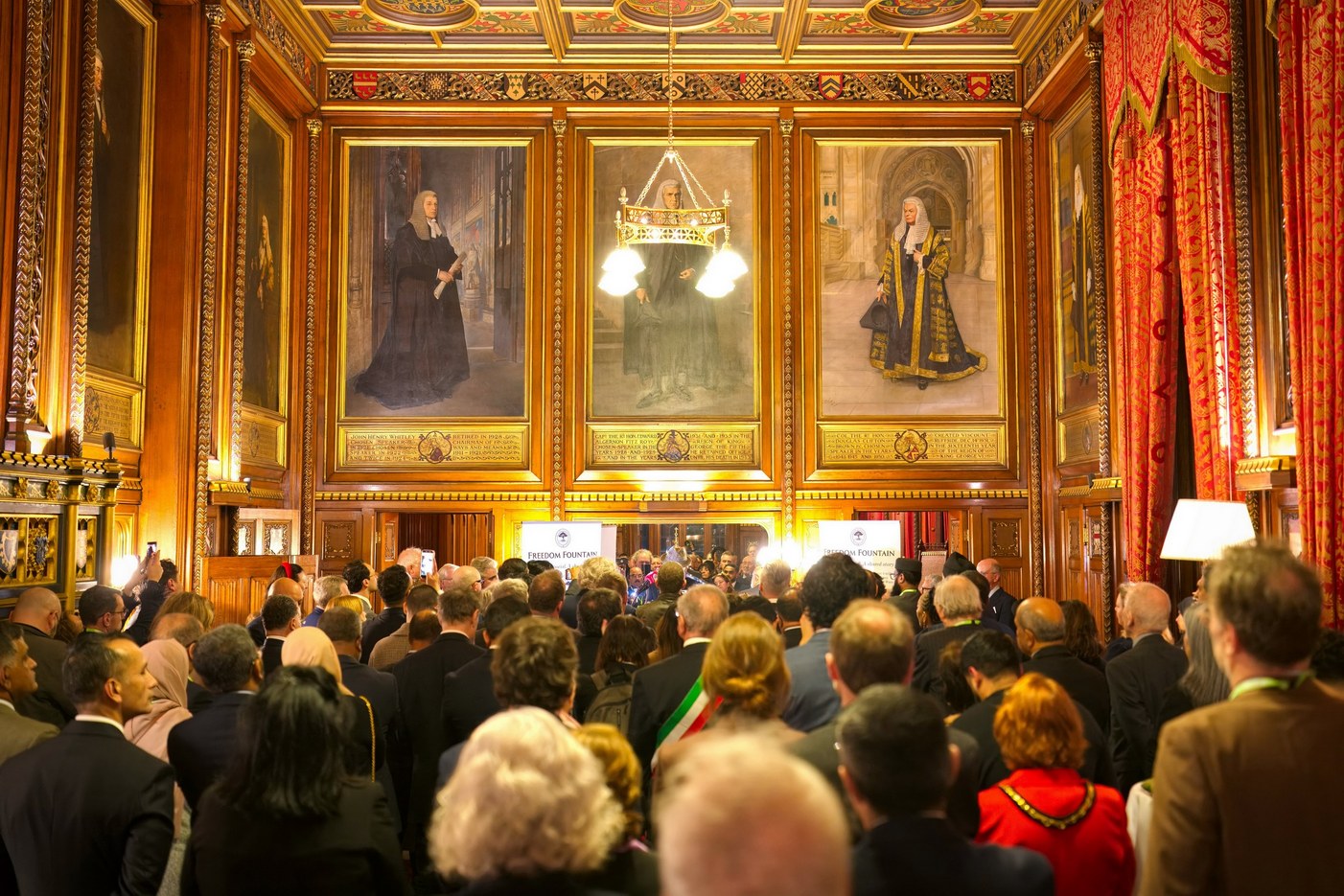
A Parliamentary welcome — and cross-party support
We were honoured to have the event hosted in the House, with strong cross-party backing. We are especially grateful to the Speaker of the House, Sir Lindsay Hoyle, whose support helped make the occasion possible, and to our local MPs Daniel Zeichner and Pippa Heylings, who sponsored and supported the event from the outset. You can find video of Sir Lindsay Hoyle's speech below.
It also meant a great deal to see Cambridge represented so strongly — including support from councillors and our wider local network — demonstrating that Westminster and the regions can come together around shared remembrance and shared responsibility.
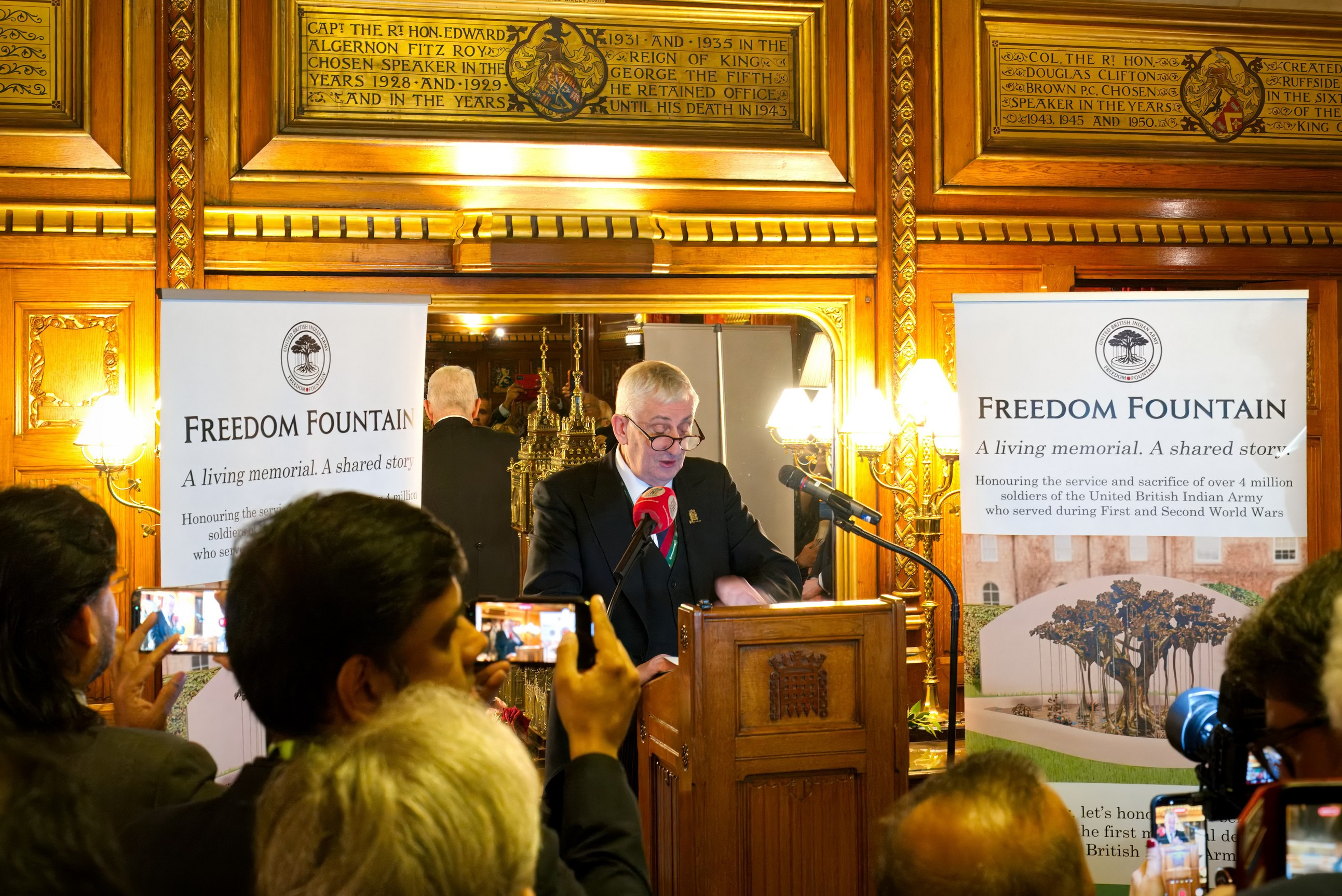
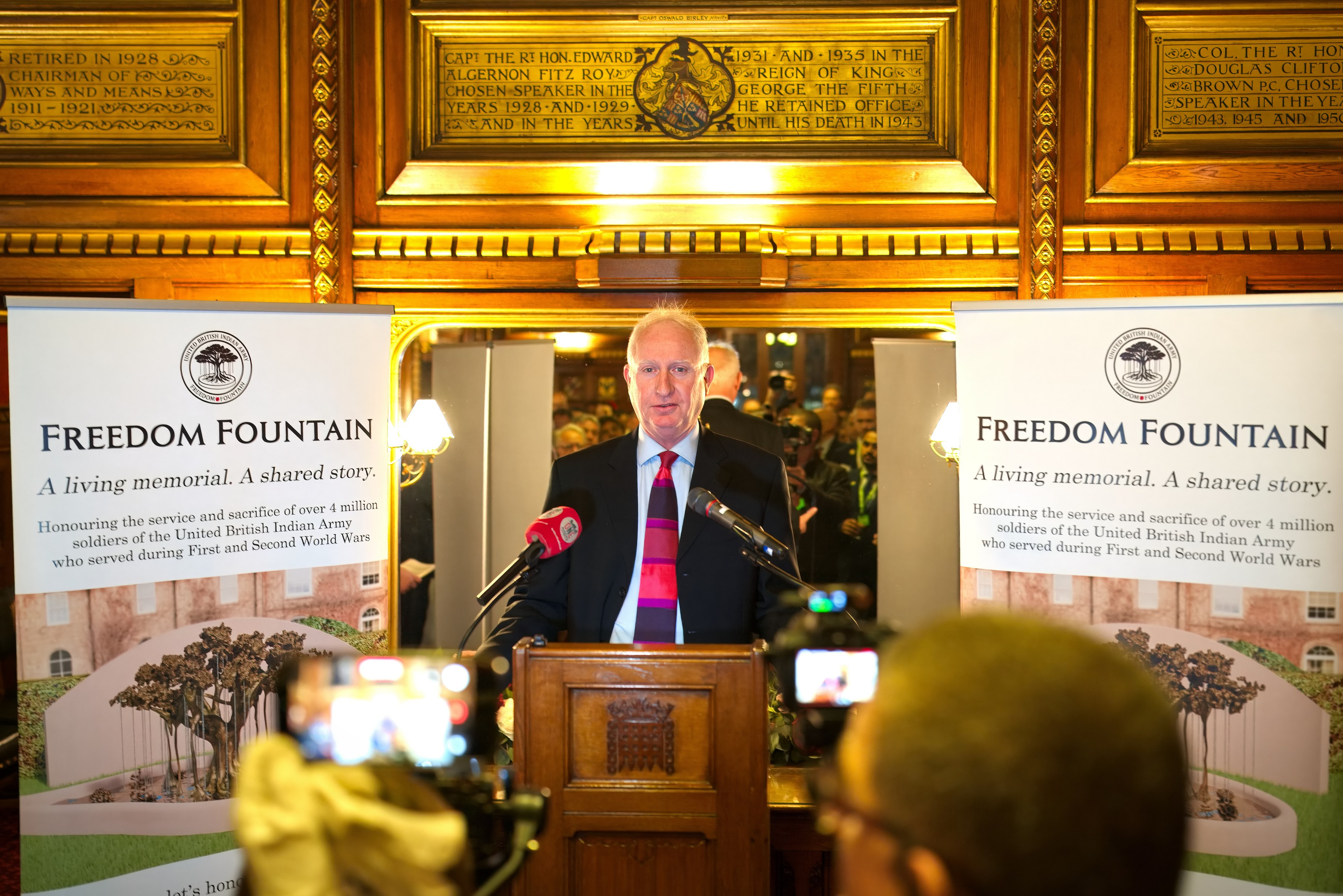
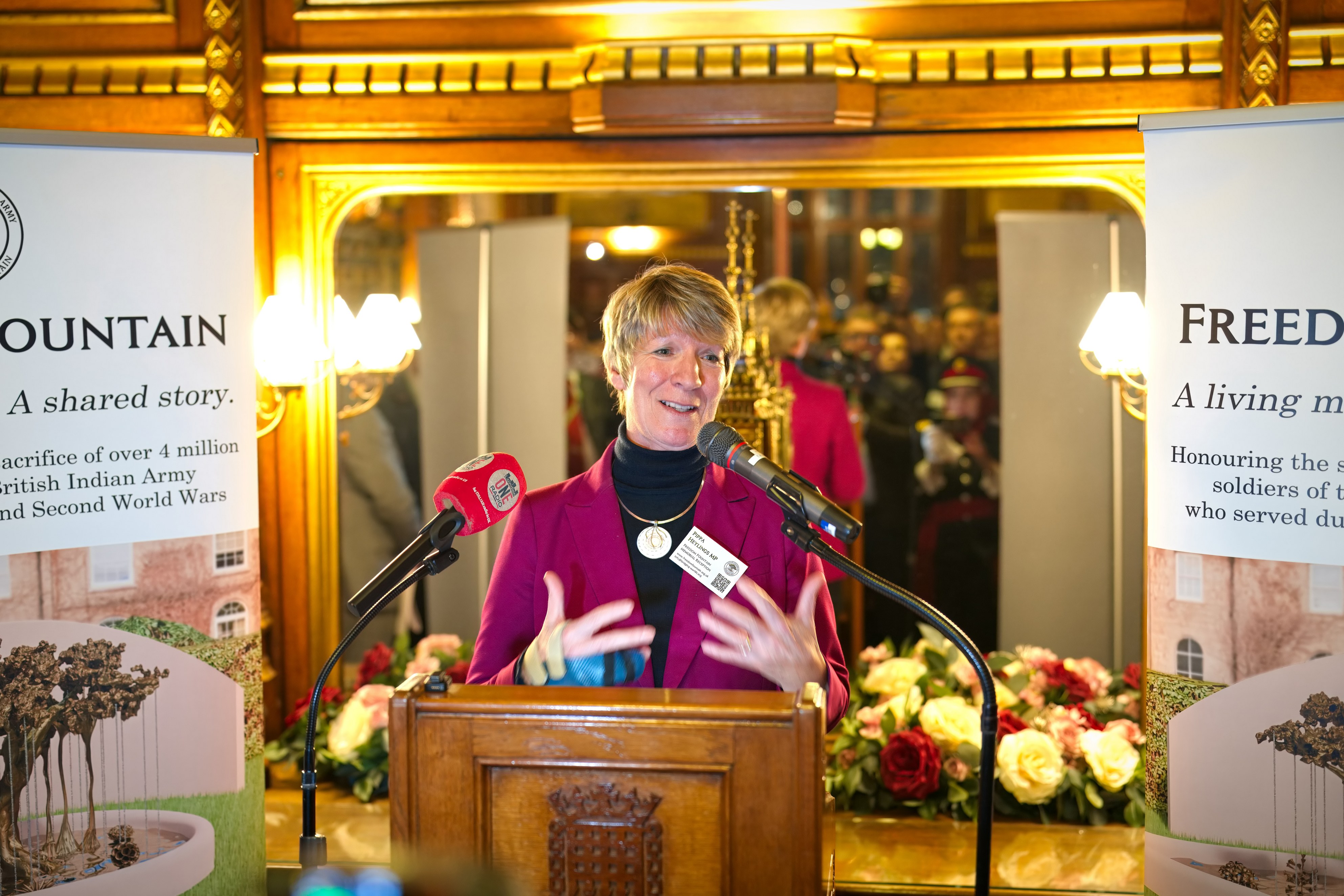
Sir Lindsay Hoyle and Cambridge MPs Daniel Zeichner and Pippa Heylings. Click to enlarge.
Why this launch mattered
The Westminster launch was designed to “showcase the Freedom Fountain and the story it seeks to honour” — but the purpose of the evening went beyond any single presentation. Again and again, the discussion returned to a simple, urgent point: the importance of honouring and understanding the contribution of more than 4 million United British Indian Army soldiers who served across the First and Second World Wars.
We spoke about why this history has not been properly understood by the current generation — and why silence, however “delicate” the subject may have felt in past decades, is not the legacy we want to leave behind. If these stories remain unknown, future generations lose the opportunity to learn from them. And if we fail to learn from history, we risk repeating the same mistakes.
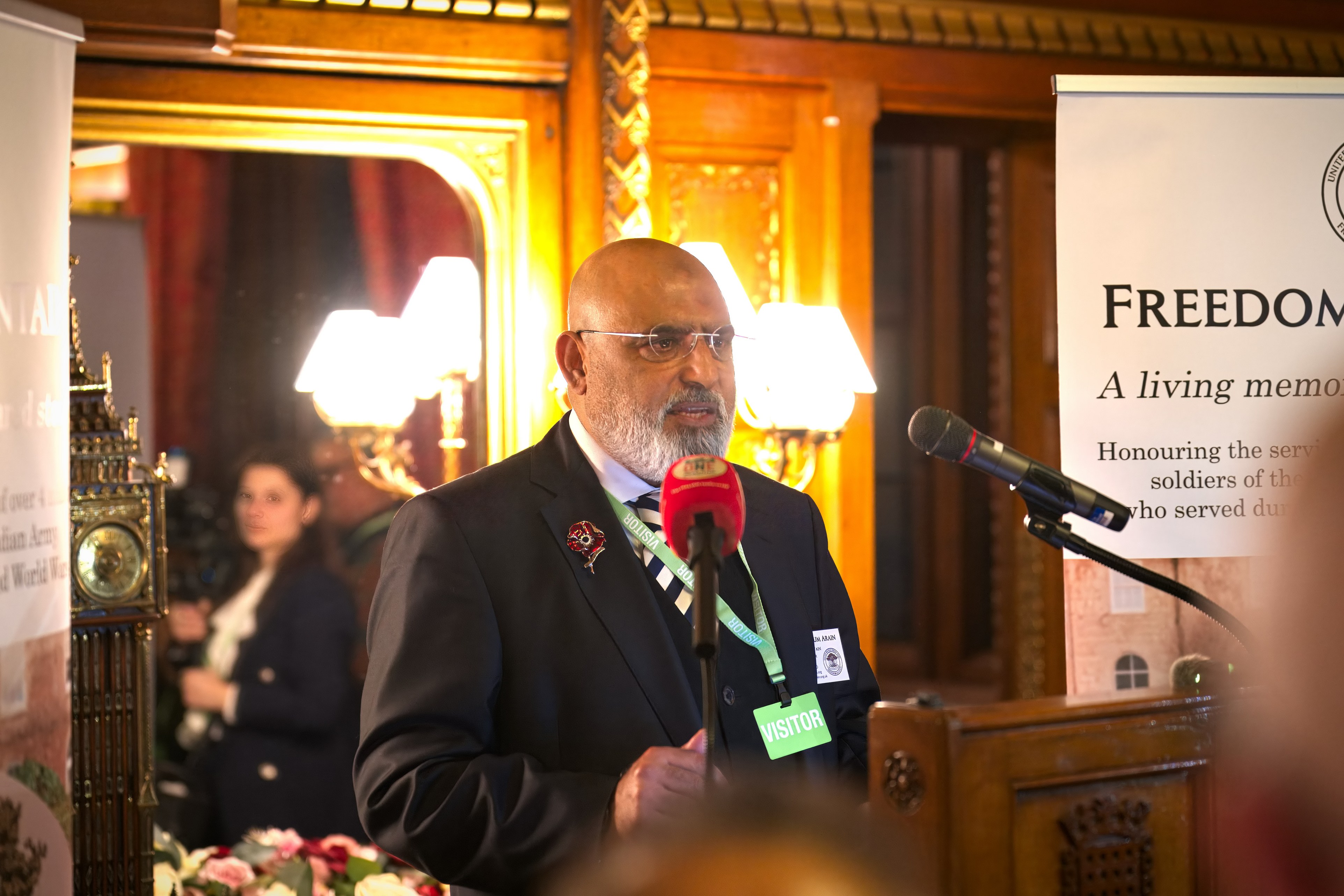
Freedom Fountain team members Capt (Ret) Yavar Abbas and Abdul-Kayum.Arain. Click to enlarge.
In a world where political tensions feel ever-present — nationally and internationally — the evening was also a reminder that remembrance is not only about looking back, but it is about the values we choose to protect now: peace, restraint, dignity, and a commitment to avoid conflict wherever possible.
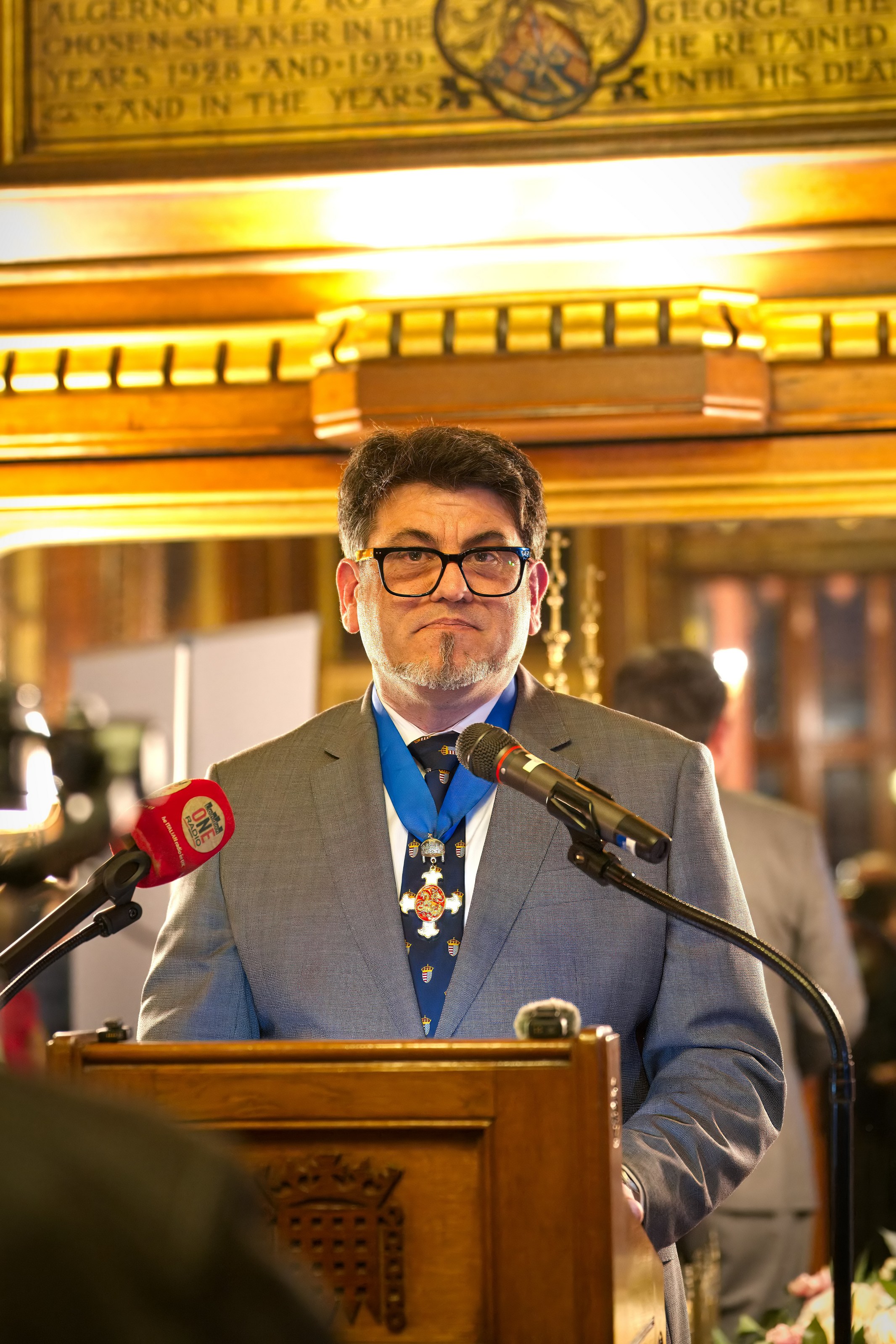
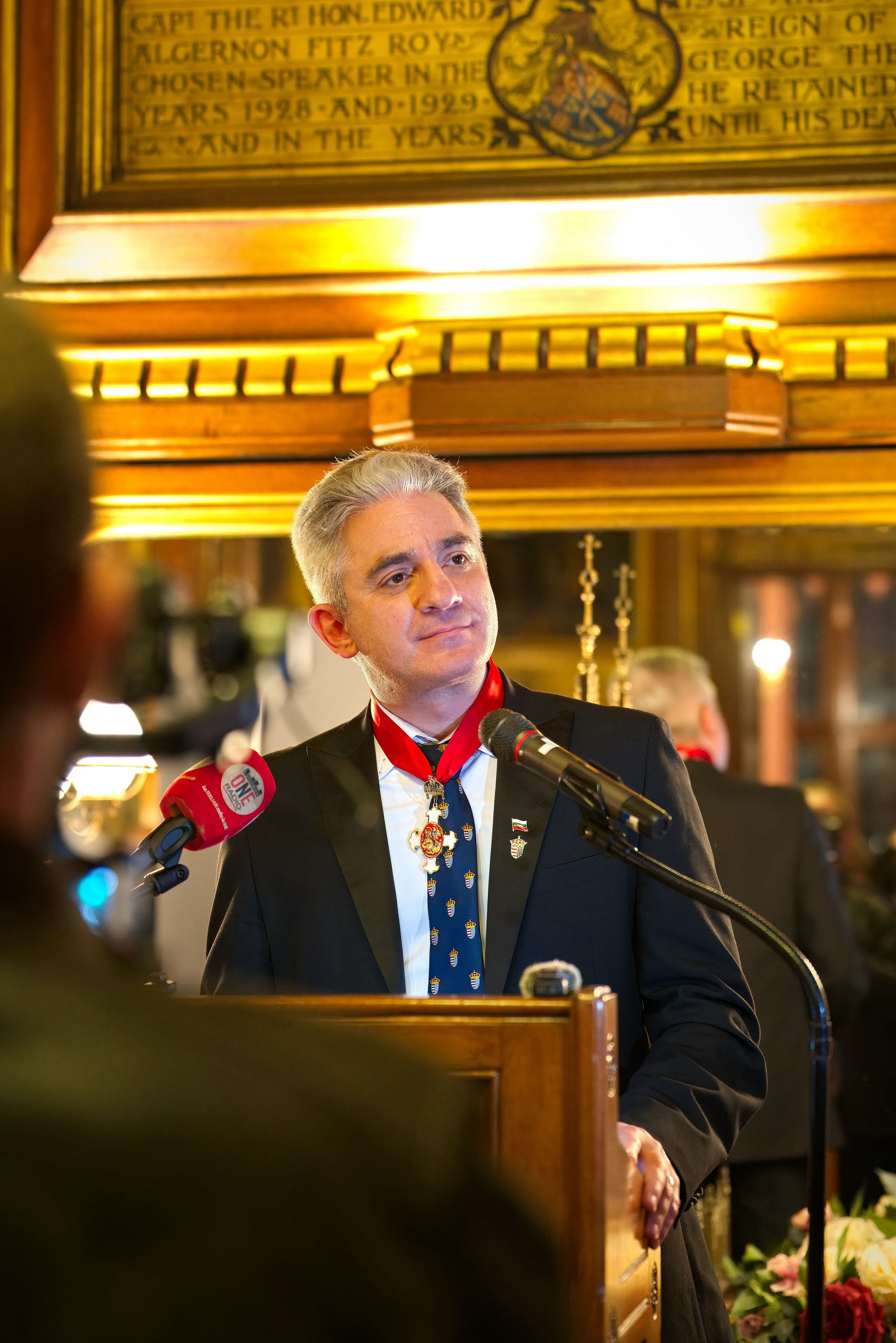
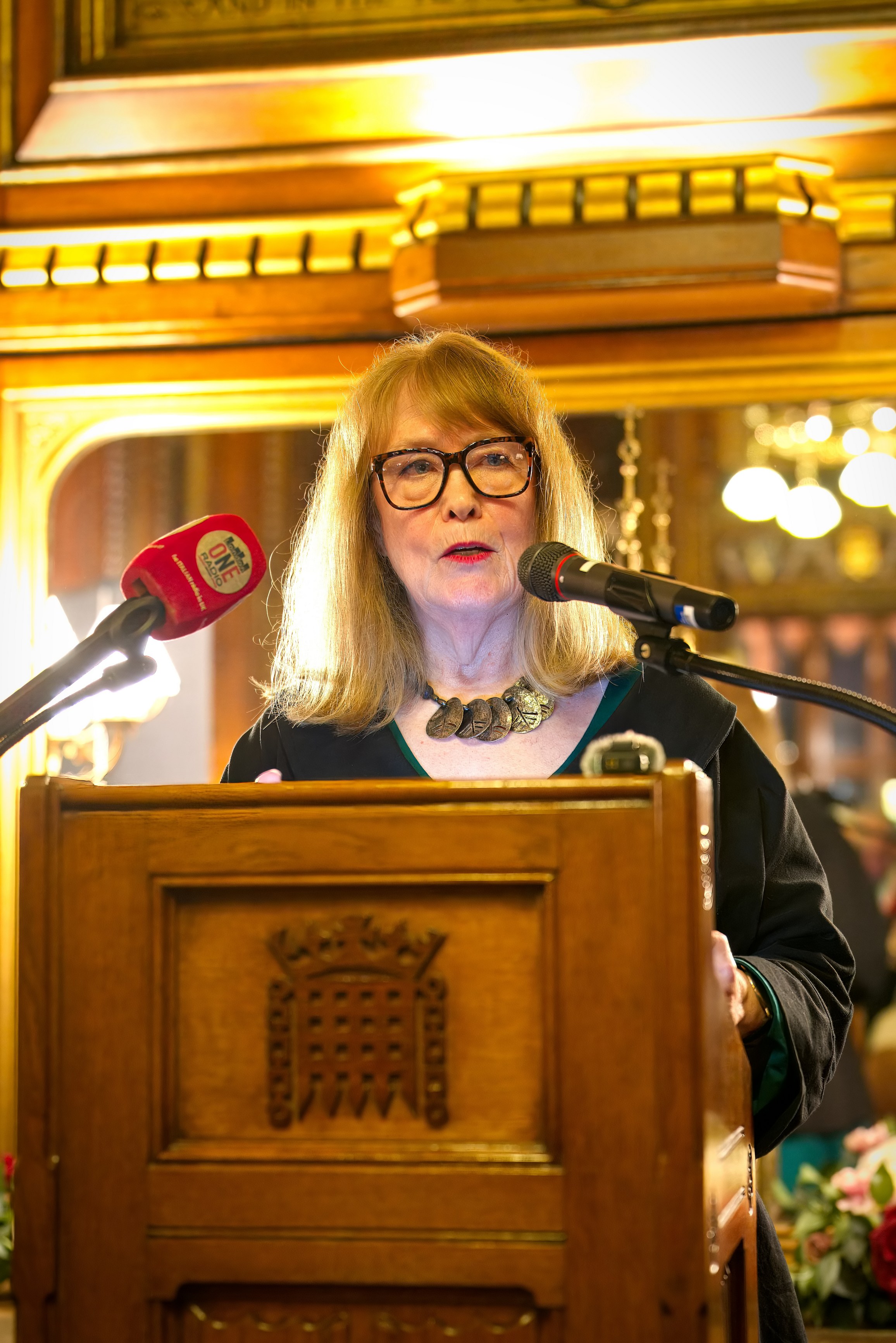
Freedom Fountain team members Piero D'Angelico, Mihail Stoyanov and Colleen McLaughlin Barlow. Click to enlarge.
Moments that captured the meaning of the night
Alongside the formal speeches, there were moments of genuine emotion — the kind that cut through talking points and remind everyone why events like this matter.
One such moment centred on our Honorary National Chair, Captain (Retired) Yavar Abbas, whose presence made the evening deeply personal. At 105 years old, Captain Abbas represents a living link to the generation whose sacrifices the project seeks to honour.
“We must remember not only what was done, but why it mattered.”
We were also fortunate to be joined by historians including Dr. Tajpal Singh Rammil, whose family history connects directly to the story being told. In an extraordinary gesture, Dr. Tajpal presented Captain Abbas with regimental buttons to replace ones Captain Abbas had lost — a gift tied to a photograph of him from nearly 80 years ago. It was moving, not only because of the objects themselves, but because it symbolised something larger: people recognising each other’s journeys and taking active steps to preserve memory rather than letting it fade.
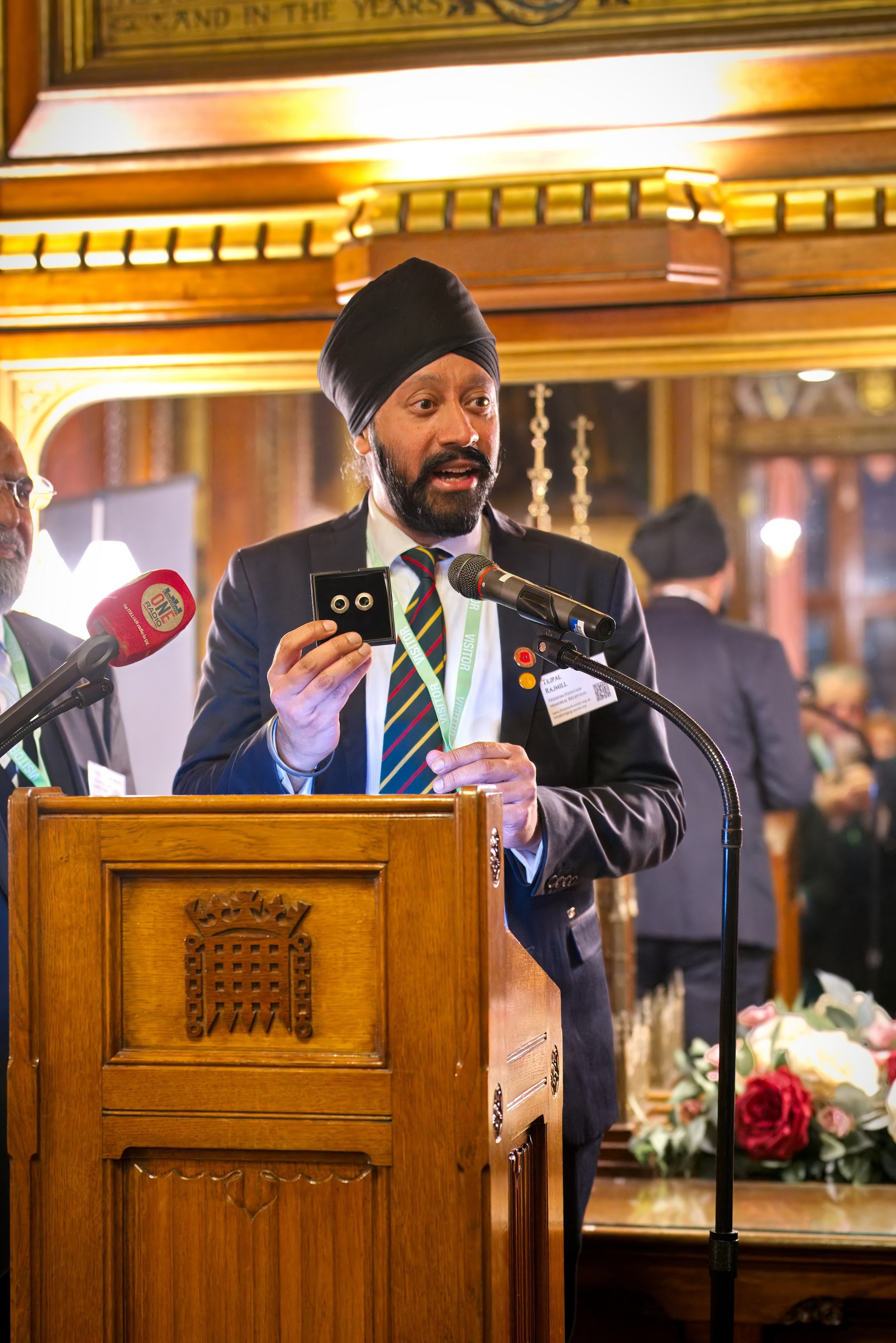
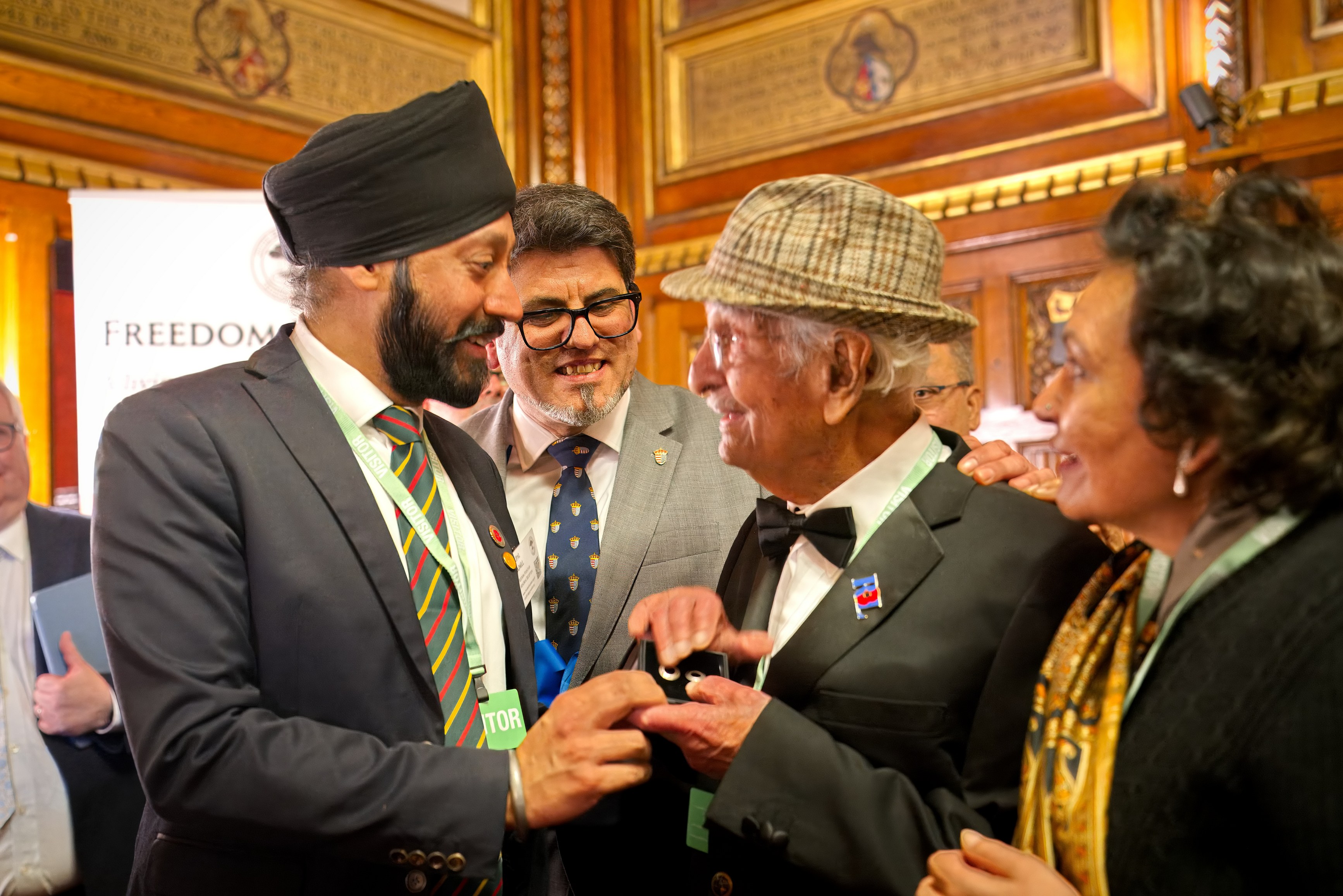
Dr. Tejpal Singh Ralmill and Captain Yavar Abbas. Click to enlarge.
International solidarity — and a delegation from Italy
We were proud to welcome a delegation from Italy, including recognition presented from the Metropolitan City of Naples by Director Renata Monda, representing the Metropolitan City of Naples and the international “Movement of Kindness” initiative. We were also honoured by the presence of Colonel Alvio Girolamo, and Sir Pasquale Marchese, who represents 29 municipalities in Puglia. Their attendance underscored a point we returned to repeatedly: remembrance does not stop at borders — and nor should gratitude.
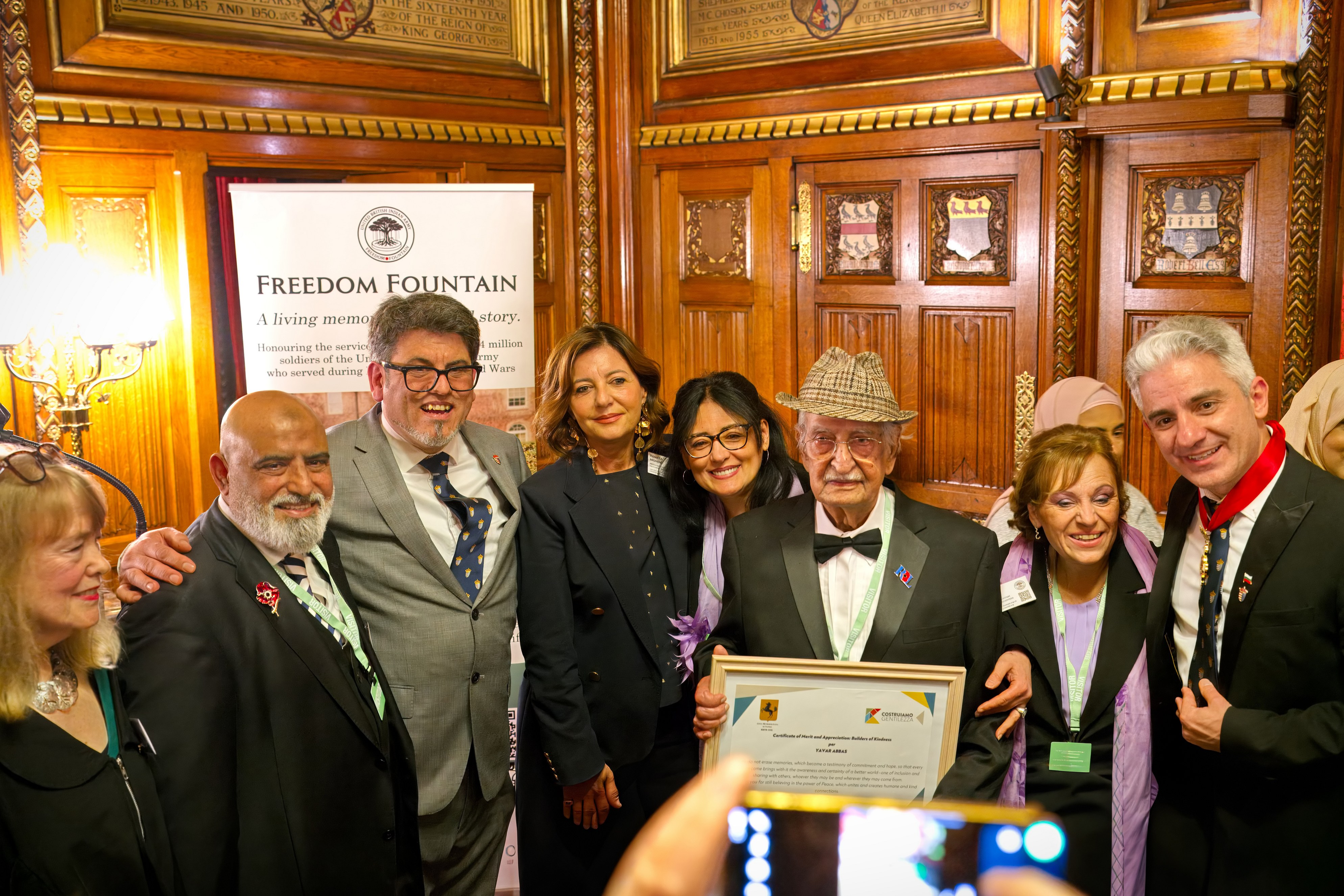
The team behind the scenes and the next generation stepping forward
If Westminster was a public-facing moment, it was powered by a great deal of work behind the scenes.
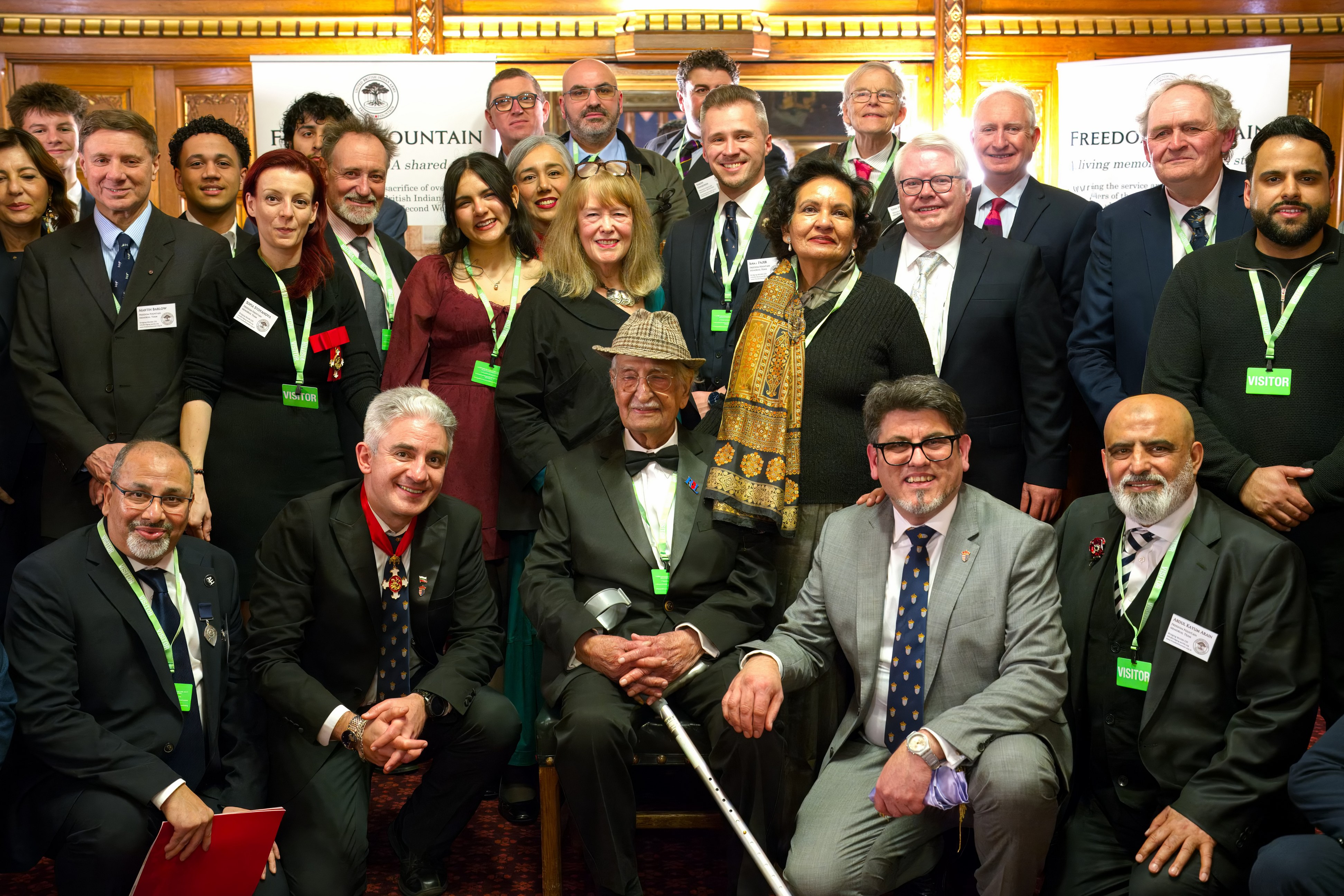
Our Cambridge team travelled in strength — over 20 people working to make the evening run smoothly. That team included long-standing campaigners, supporters from many walks of life, and — importantly — younger members who brought energy, professionalism, and hope for what comes next.
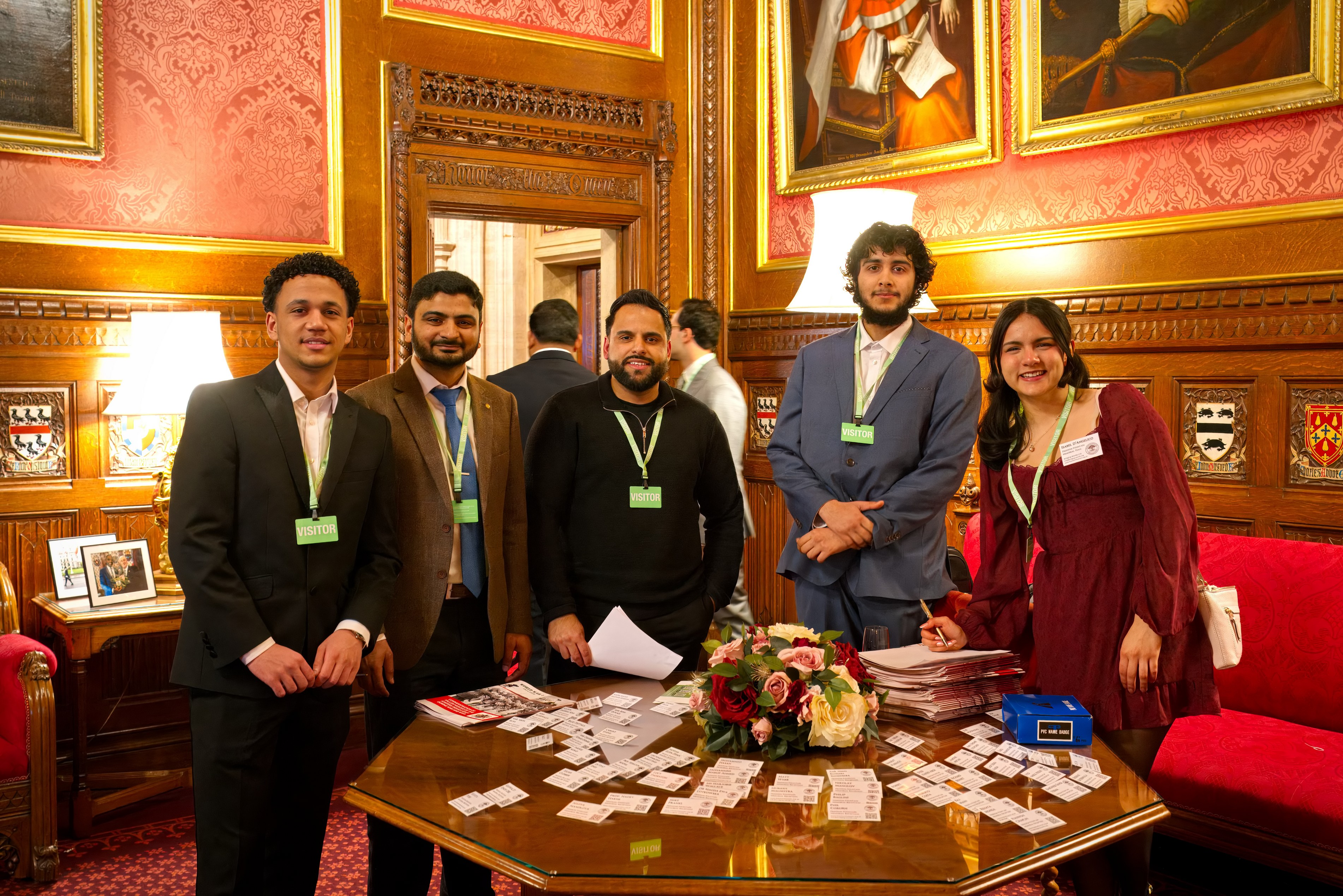
Freedom Fountain team members Waseem Oulfki, Mohammad Arslan, Qasim Arain, Sameer Sharma, Waseem Oulfkih, Isabel D'Angelico. Click to enlarge.
We want to recognise that contribution clearly. Seeing young people in their late teens and early twenties step forward to help deliver a parliamentary event with confidence and pride was one of the most encouraging aspects of the evening.
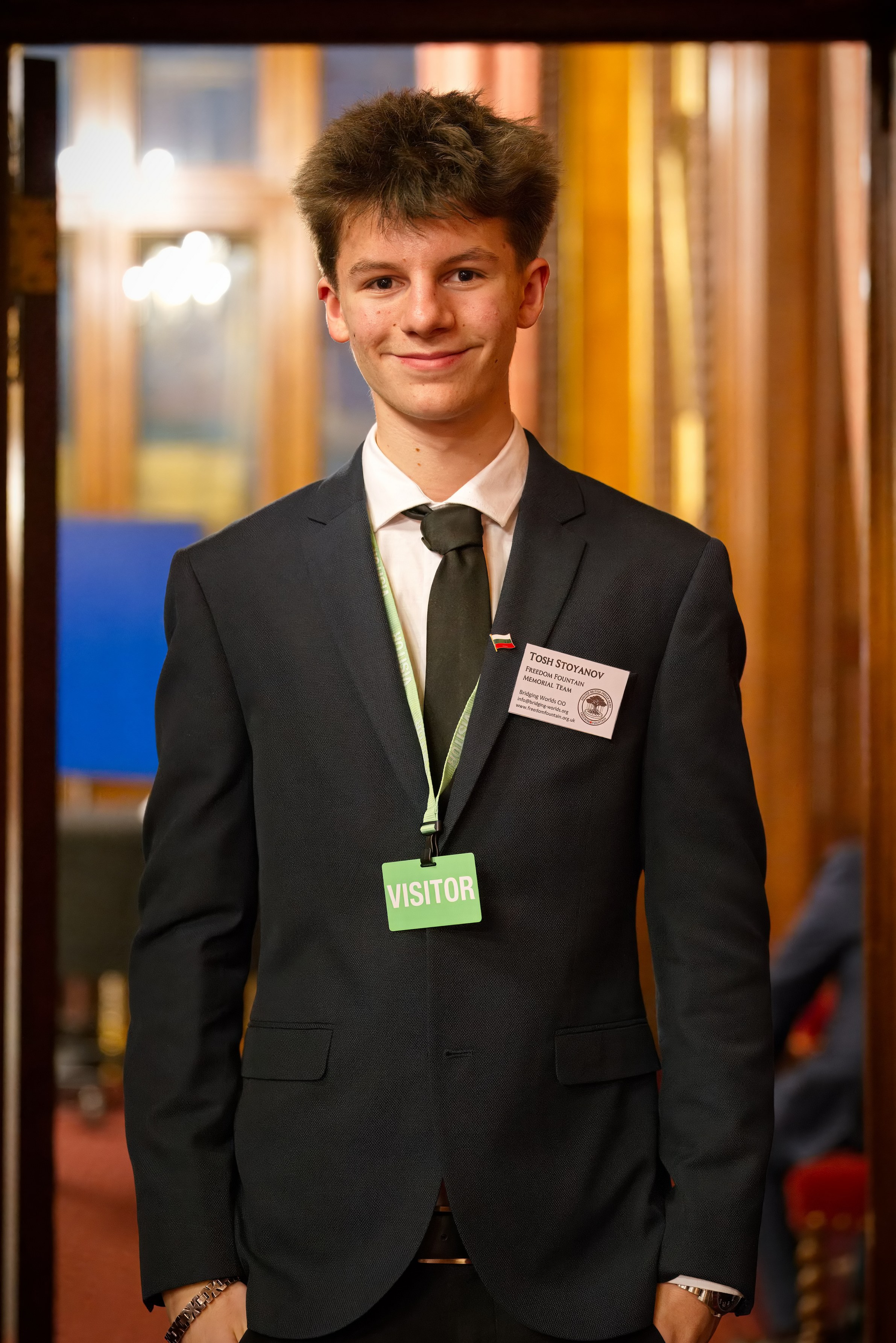
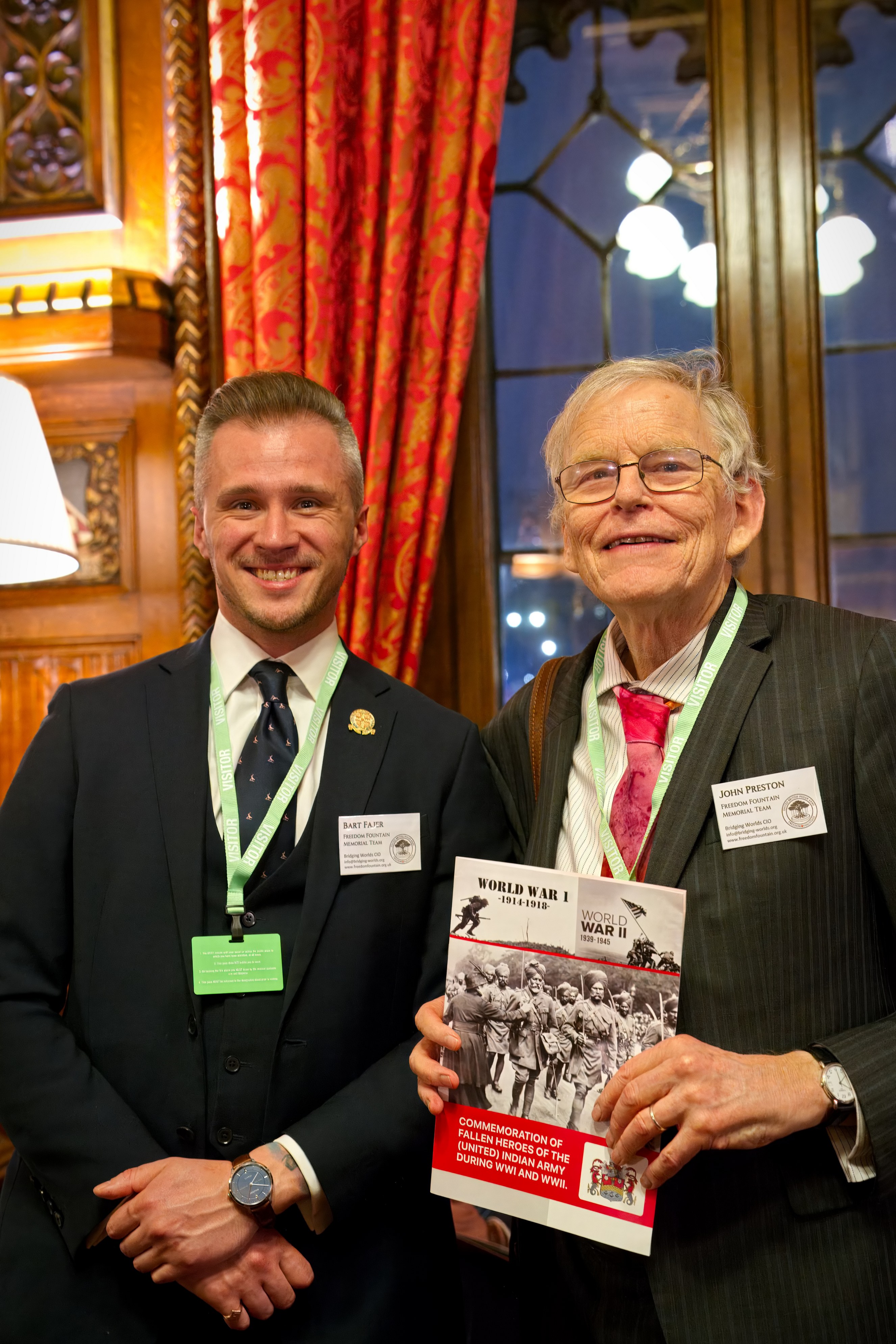
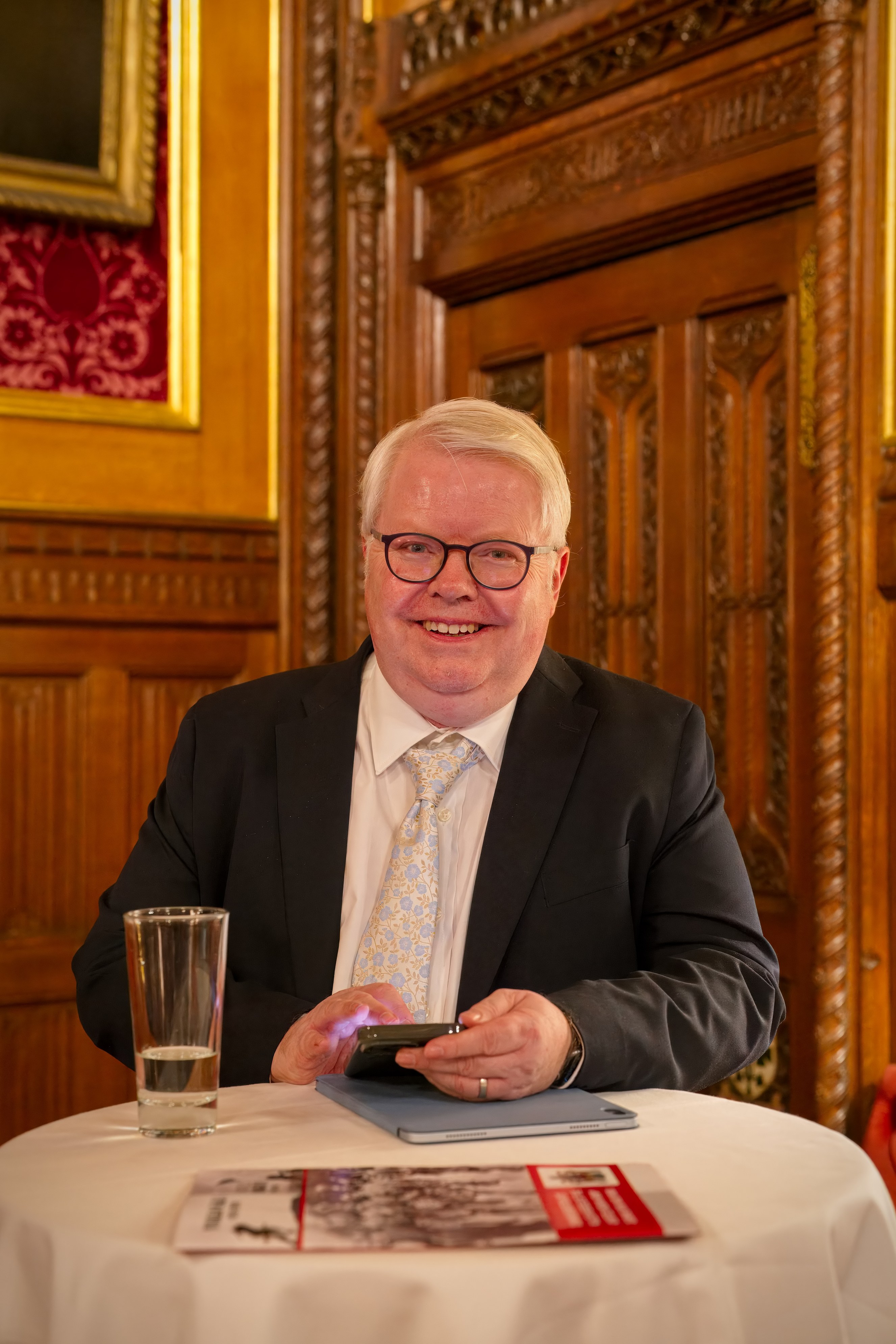
Freedom Fountain team members Todor Stoyanov, Bart Fajer, John Preston, Mihail Stoyanov and Julian Clobber. Click to enlarge.
With gratitude
We are grateful to everyone who attended, supported, and contributed — including MPs, Lords, Ministers, community leaders, historians, and supporters who gave their time and presence.


Lynda Atkins (Royal British Legion),Adam Moghadas, Ashley Whitaker, Cllr Baiju Thittala. Click to enlarge.
Most of all, we are grateful for the shared understanding in the room: that remembrance has to be active, stories have to be told clearly, and future generations deserve the truth — not fragments, and not silence.
This Westminster launch was the start of a new chapter. And we intend to keep turning the pages.
The Freedom Fountain is not yet built — it exists today because of the belief and generosity of individuals who feel this history deserves a permanent place in our national landscape. Every step forward, including moments like the Westminster reception, brings the project closer to becoming a lasting place of remembrance for future generations.
As the Freedom Fountain project moves forward, public support remains essential. Every contribution helps bring the monument closer to reality and ensures that the shared sacrifices it represents are properly remembered.
In the news
You can find articles about the Freedom Fountain Memorial reception in Westerminster from the following media outlets:
- Cambridge Independent: Veteran, 105, backs Freedom Fountain initiative for Cambridge at Westminster reception
- ITV News: World War II veteran calls for a memorial to the Indians soldiers who fought for Britain
- The Mirror: 105 year old war hero who moved King and Queen to tears 'thrilled' to mark historic moment
- Italian Radio 1 London: House of Commons presents 'Freedom Fountain,' the memorial honoring the Indian Army
Video of Sir Lindsay Hoyle's inspiring speech
Photos from the reception
You can find a small selection of photos below. All photos can be found in the Photos section on our Facebook page.
- Details
We’re delighted to share three major milestones for the Freedom Fountain Memorial Project — and one clear next step for everyone who’s been asking how to help: you can now donate to help us build the memorial in Cambridge.
If you’ve followed our updates over the past year — from our first community gathering at Ditchburn Place to the relationships we’ve built through civic and parliamentary conversations — this is the moment the project turns from vision to delivery.
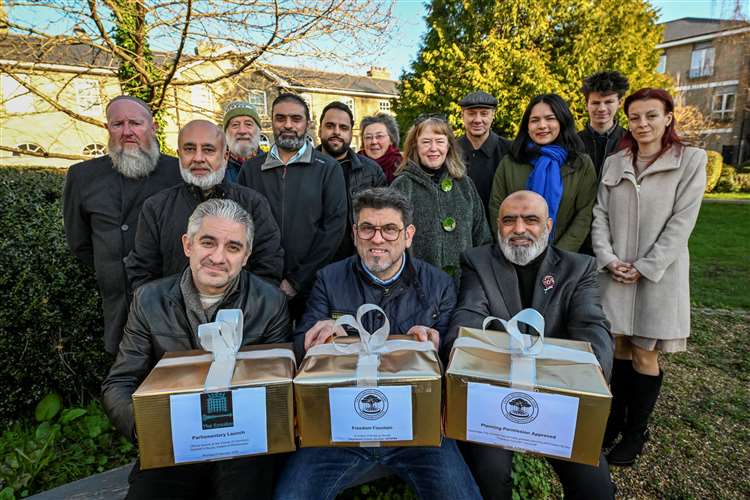
On the 2nd of January 2026, we marked this “before” moment, ahead of transforming the space into a lasting memorial On the photo are the Bridging Worlds charity, with some of the others involved in the project. Picture: Keith Heppell / Cambridge Independent
1) Planning permission is granted — we can build at Ditchburn Place
Cambridge has now granted full planning permission for the Freedom Fountain Memorial to be built at Ditchburn Place (just off Mill Road), beside the Cambridge Gateway from India. That approval confirms the memorial can be delivered in its intended form and location — a huge step forward after months of consultation and detailed design work.
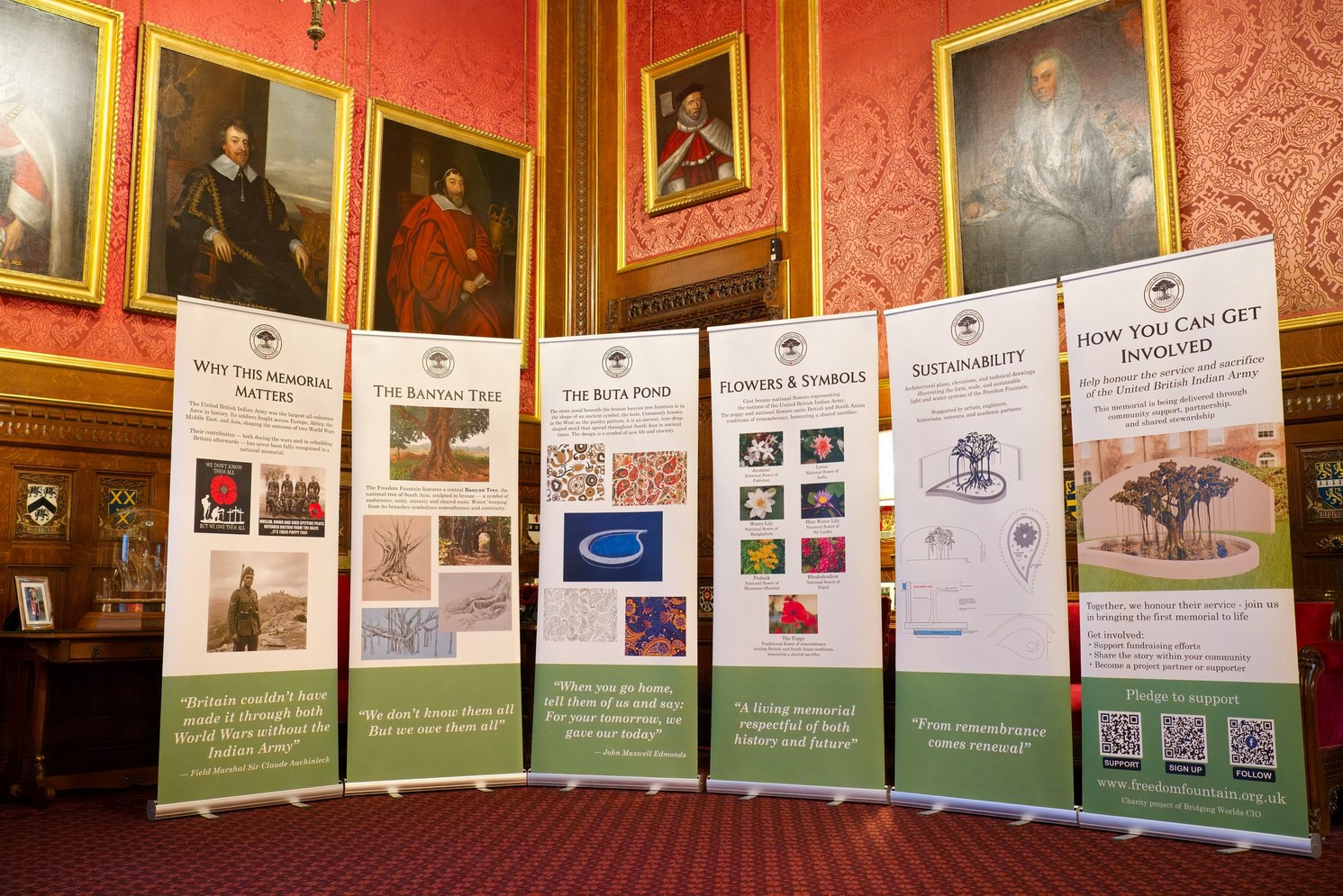
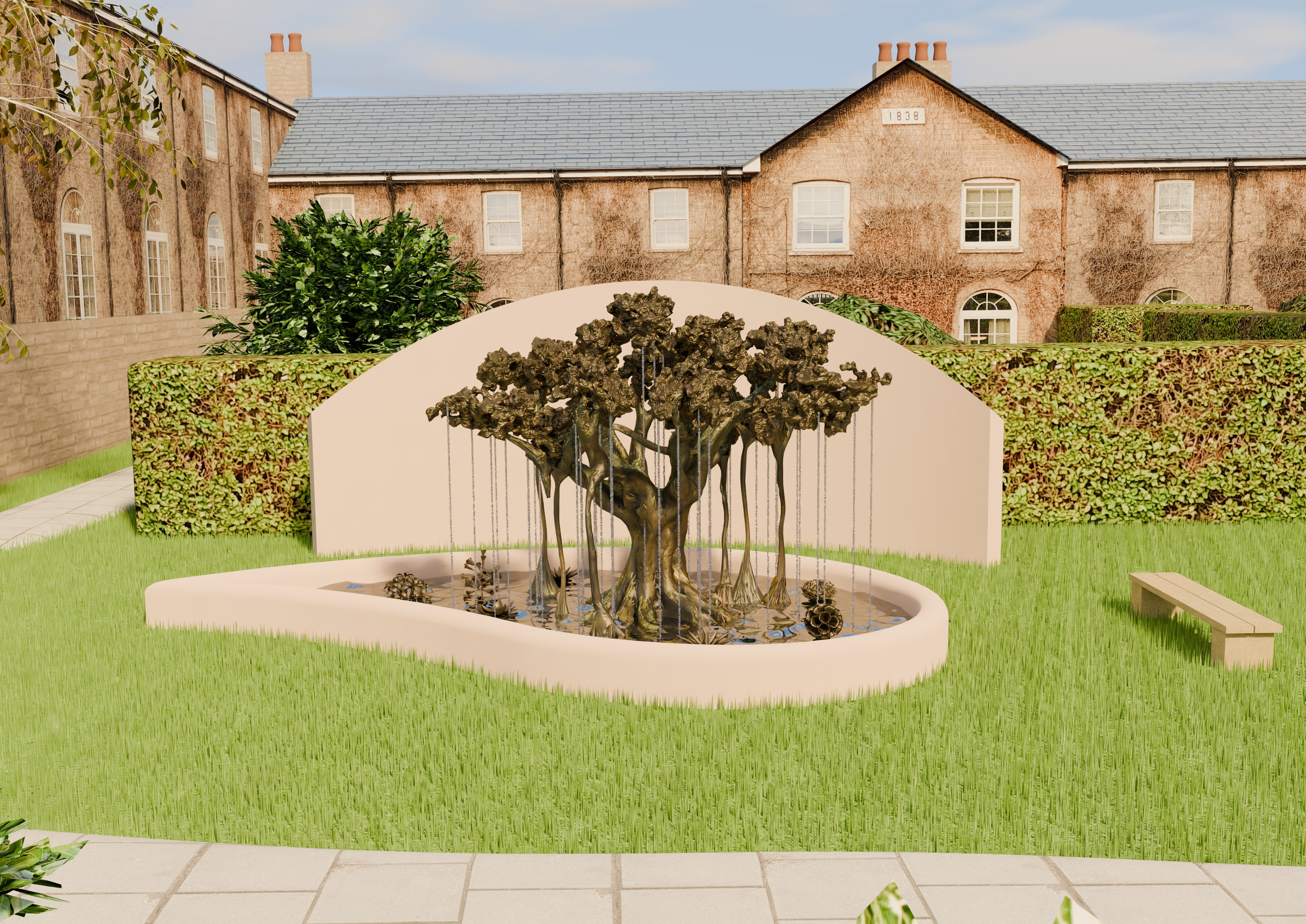
What we’re building (in brief): a working fountain and “living memorial” designed for everyday encounter — a place of reflection, learning, and shared remembrance in one of Cambridge’s most diverse neighbourhoods.
2) Our charity is registered — and donations can now go directly to delivery
We’ve also secured a crucial foundation for the work behind the scenes: the charity supporting the project is now formally registered under UK Charity Number 1215794. This gives the memorial a dedicated governance structure and a robust platform for transparent fundraising and delivery.
Our constitutional objects are clear: to advance arts, culture and heritage through memorials; to advance education in shared history and service; to promote community cohesion; and to embed sustainable development in how the project is designed, built, and stewarded.
3) Westminster reception — bringing the project to a national audience
To match the scale of the story we’re telling, we’re taking Freedom Fountain to Westminster. On 9 February, we will host a reception at Speaker’s House, Westminster, bringing together supporters, community leaders and dignitaries to showcase the project’s purpose and progress — and to widen the circle of people helping us deliver it.
This follows the spirit of our recent public work: building partnerships that keep the memorial apolitical, areligious, and all-encompassing — while honouring service and sacrifice across communities.
In the Cambridge Independent: Our latest milestone has also been covered by the Cambridge Independent.
Call to action: donate now to help build the memorial
With planning permission secured and the charity in place, we are now actively fundraising for construction and installation. The current projected budget range is £100,000–£150,000, depending on final technical and materials decisions.
Please donate via our Support page — and share it with anyone who believes Cambridge should tell this story in public, in permanent form.
Every contribution helps move us from approved plans to a built memorial — in bronze, stone, water and light — that future generations can visit, learn from, and gather around.
The people and partners making this possible — Thank You!
We want to pause and recognise the growing circle of people who have helped bring Freedom Fountain to this point — from early conversations to planning approval, and now into delivery.
Local civic support and encouragement has been vital from the start. Our early discussions in Cambridge — including with former Mayor Baiju Thittala — helped shape the belief that remembrance should live in the city year-round, not only on ceremonial dates.
At Westminster, support is helping us build a national platform for a Cambridge-led memorial. We’re grateful for the backing around the upcoming Speaker’s House reception — including support involving Cambridge MP Daniel Zeichner, other parliamentarians, and the Speaker’s office — as we bring this story to a wider audience and invite more people to stand with the project.
We also want to thank the artists, engineers and institutions contributing expertise to ensure the memorial is both beautiful and built to last:
- Cambridge-based sculptor Colleen McLaughlin Barlow, whose banyan-tree concept sits at the heart of the memorial’s symbolism and design.
- The Dyson Centre for Engineering Design (University of Cambridge) and its team supporting the plumbing/hydraulics and technical development, alongside specialist contributors including Dr Richard Roebuck, Mr Barney Coles, Dr Claire Barlow, Dr Jim Woodhouse, and Professor Allan McRobie.
- Anglia Ruskin University (ARU), through its Live Brief Programme, supporting public engagement and interpretive elements such as signage and narrative installations.
- Bronze Age Foundry (East London), bringing world-class casting craft to the memorial’s bronze elements.
- Our wider design and delivery contributors, including Dean Goodchild (Cantab Design Ltd.), Jon Baxter, and Skyla Wang, supporting architecture, sustainability, maintainability, and visual communication.
We’re equally grateful for community endorsement, including from Dr Atif Aziz and the Cambridge Pakistan Cultural Society, whose words reflect exactly the kind of inclusive civic memory we’re working to create.
And we want to offer special thanks for the public encouragement of Captain (Ret.) Yavar Abbas, whose endorsement has brought historic weight and human emotion to this project.
- Details
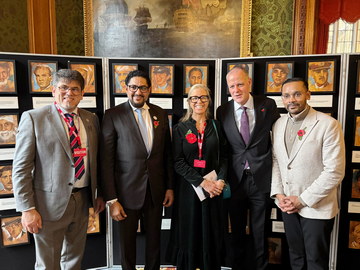
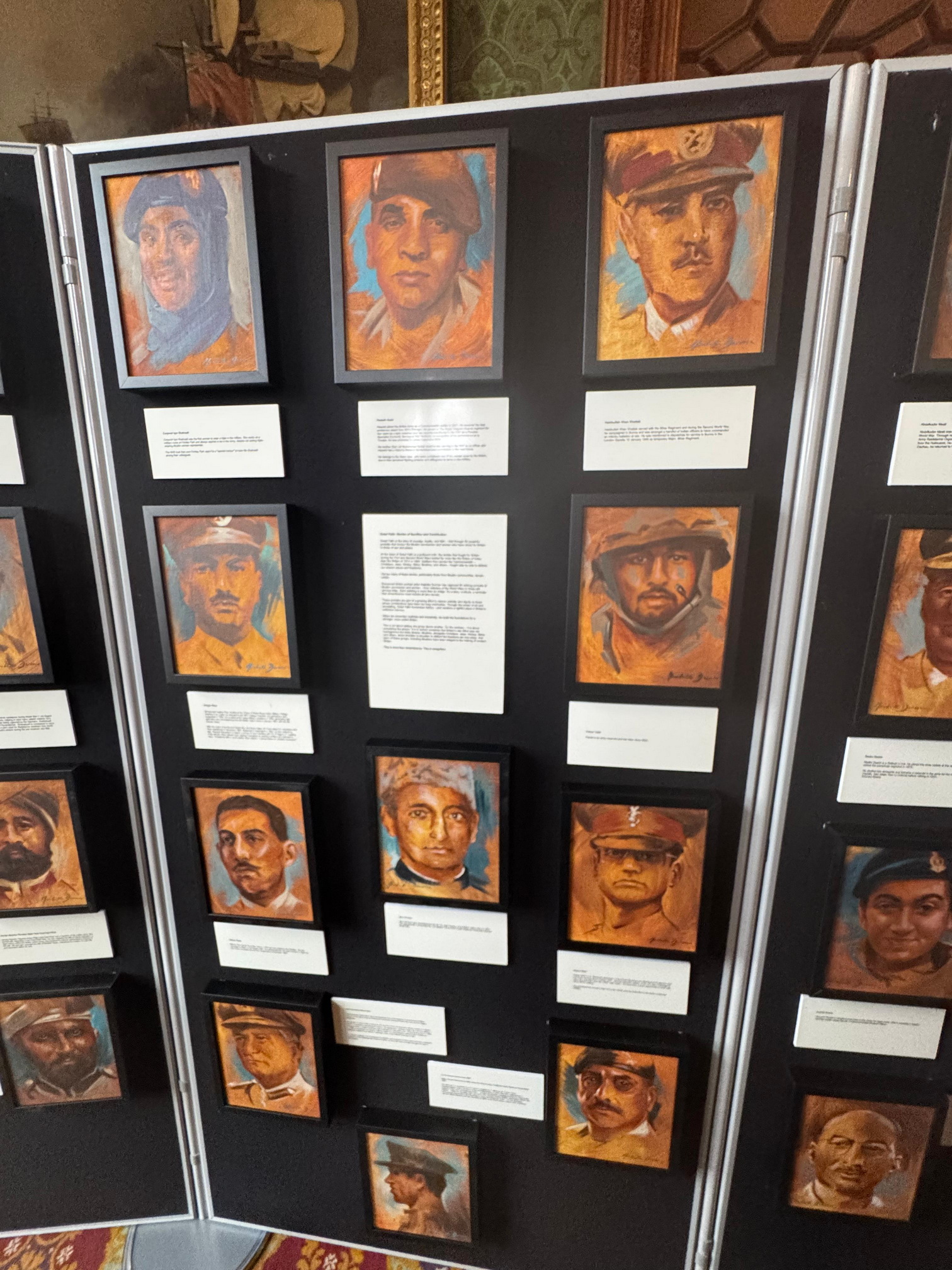
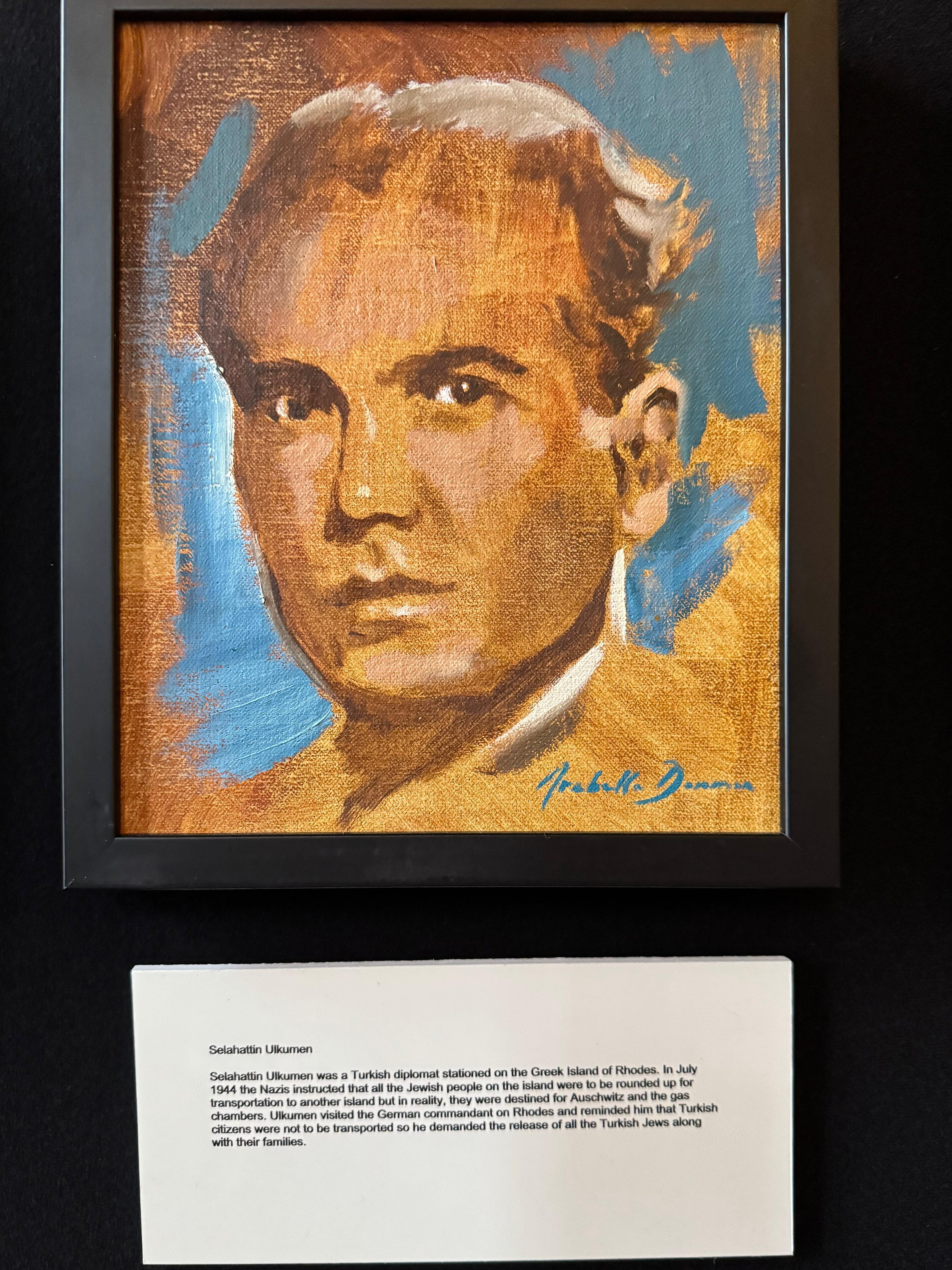
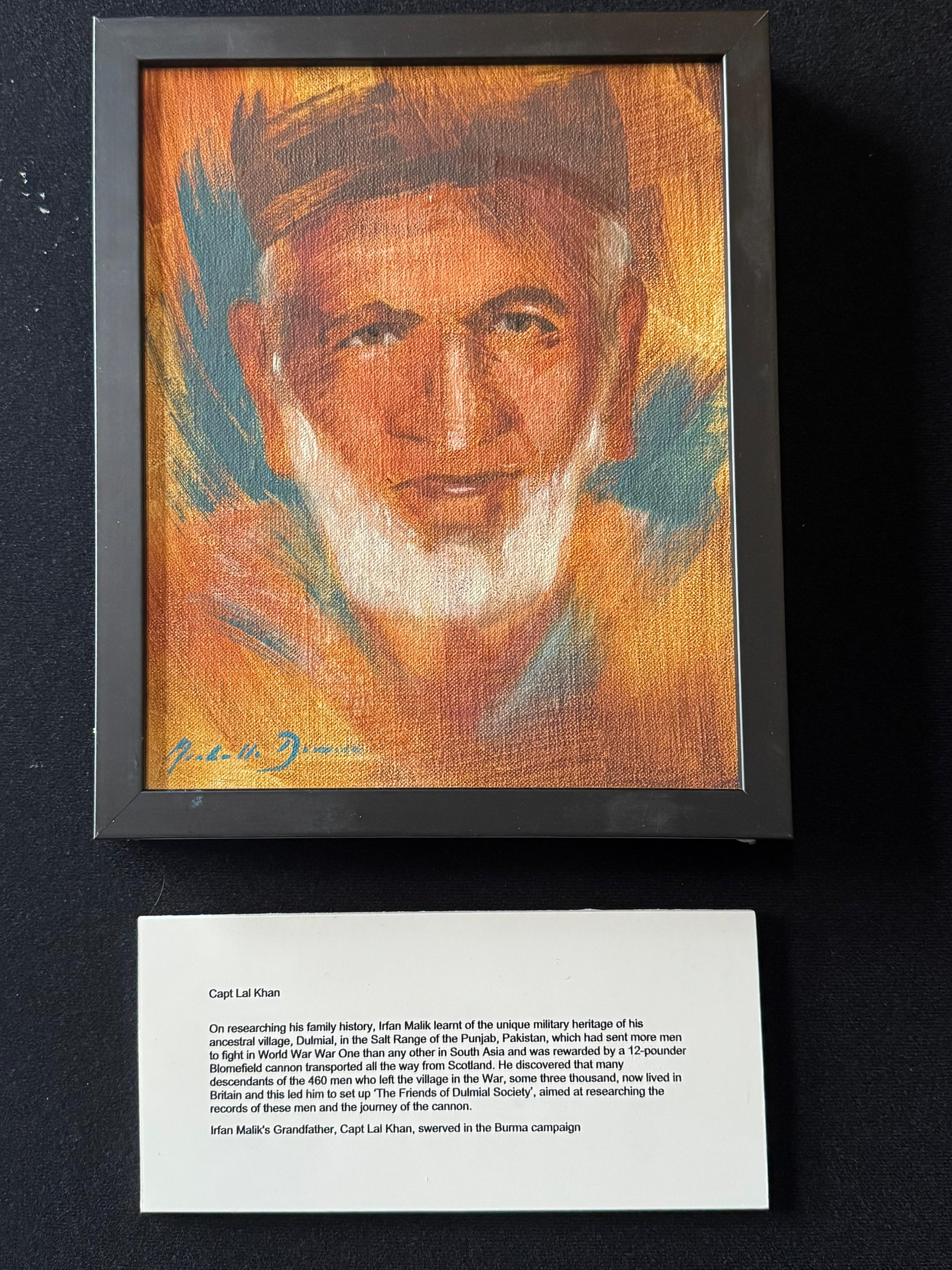
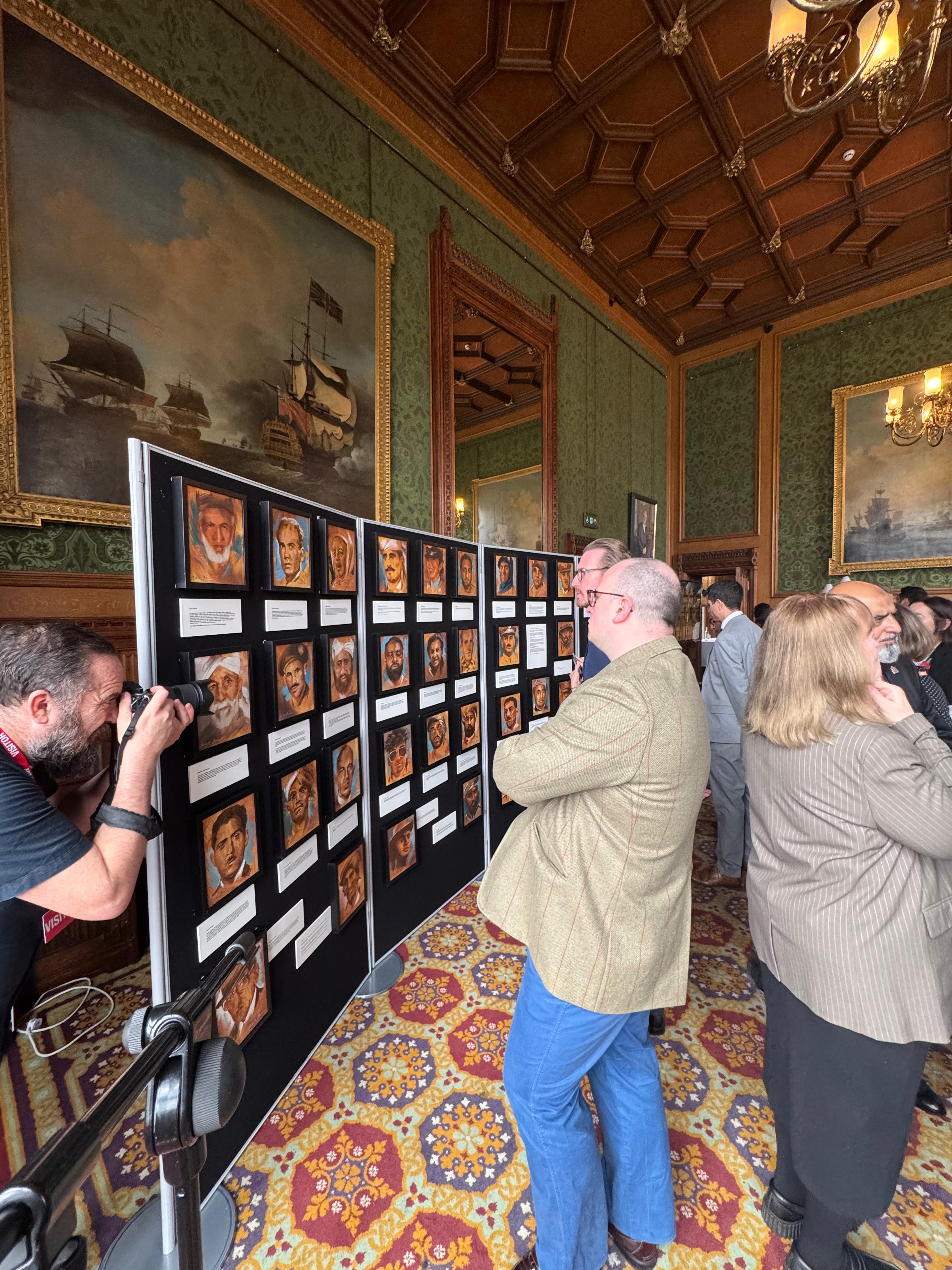
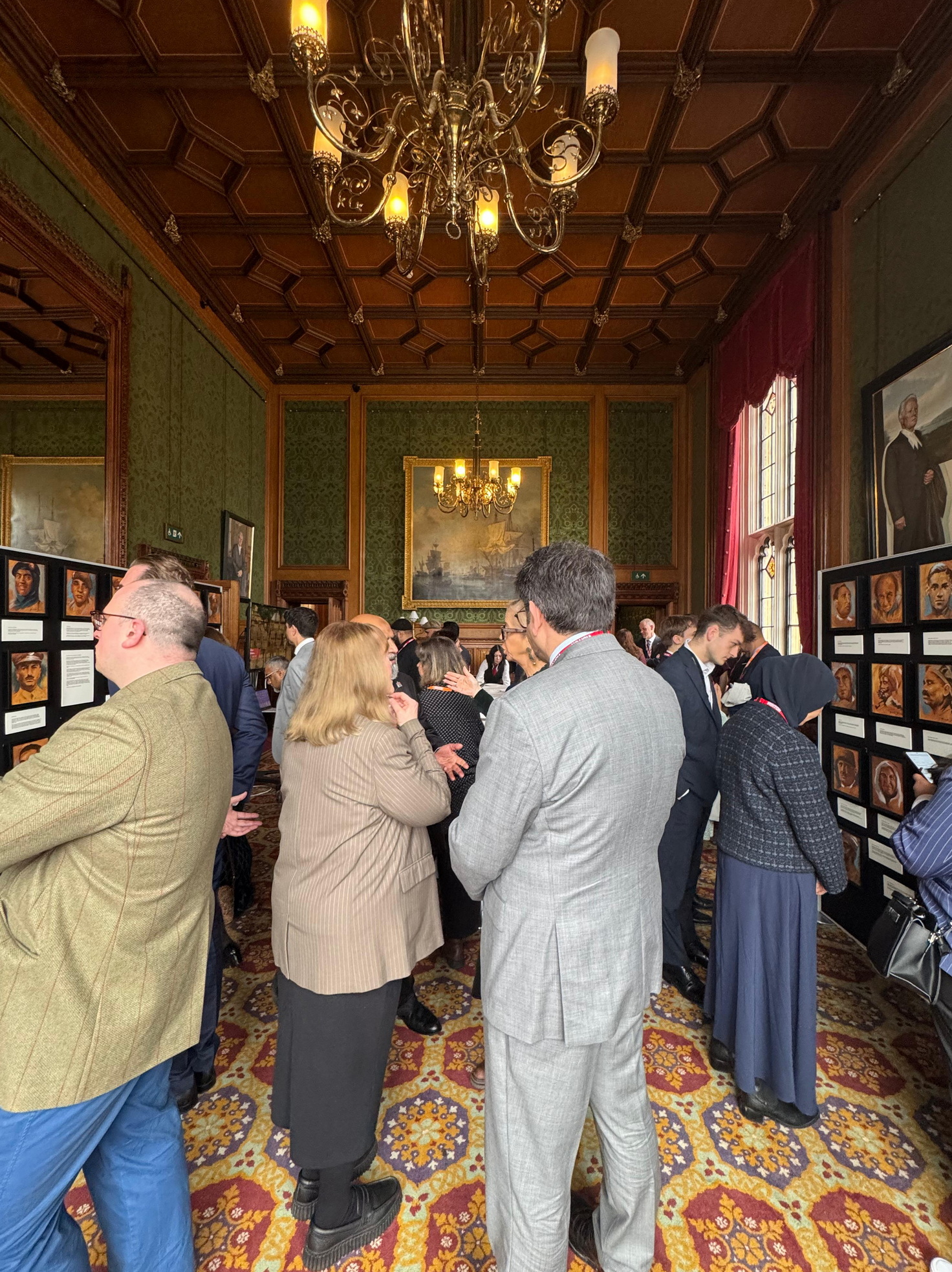
On the 10th of November our team joined the Great Faith Initiative for an intimate lunchtime reception in the River Room, House of Lords, a setting reserved for charitable and cross-party gatherings overlooking the Thames. The reception—hosted with the support of The Rev. the Lord Russell Rook (Baron Rook) and led by Nizam Uddin OBE — centred on Great Faith: Stories of Sacrifice and Contribution, a portrait series by Arabella Dorman honouring servicemen and women of many faiths who fought for Britain during the World Wars and those who serve today.
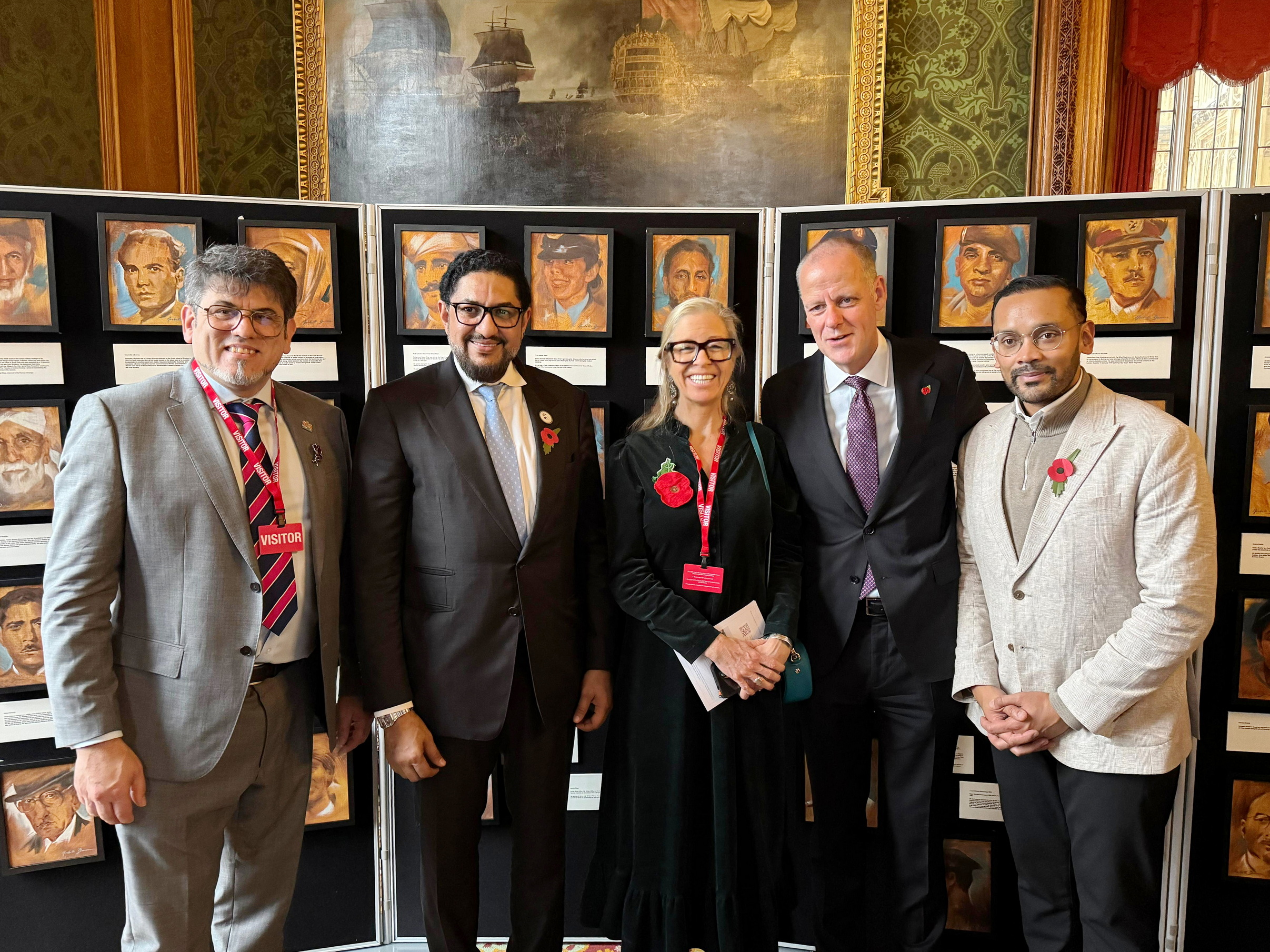
A shared purpose
Speaking on behalf of the project, Abdul highlighted Freedom Fountain’s core ethos: an apolitical, areligious, all-encompassing memorial that honours service and sacrifice across communities. Artist Colleen McLaughlin Barlow briefly outlined the creative process behind the memorial concept and reflected on how little many in Britain—including herself before this work—knew about the scale and significance of the United British Indian Army’s contribution.
“Our unique strength is inclusivity.”, added Piero D’Angelico. “That’s what gives this memorial such momentum”.
Encounters that move the work forward
What made the day exceptional was the calibre of conversations—and the warmth behind them:
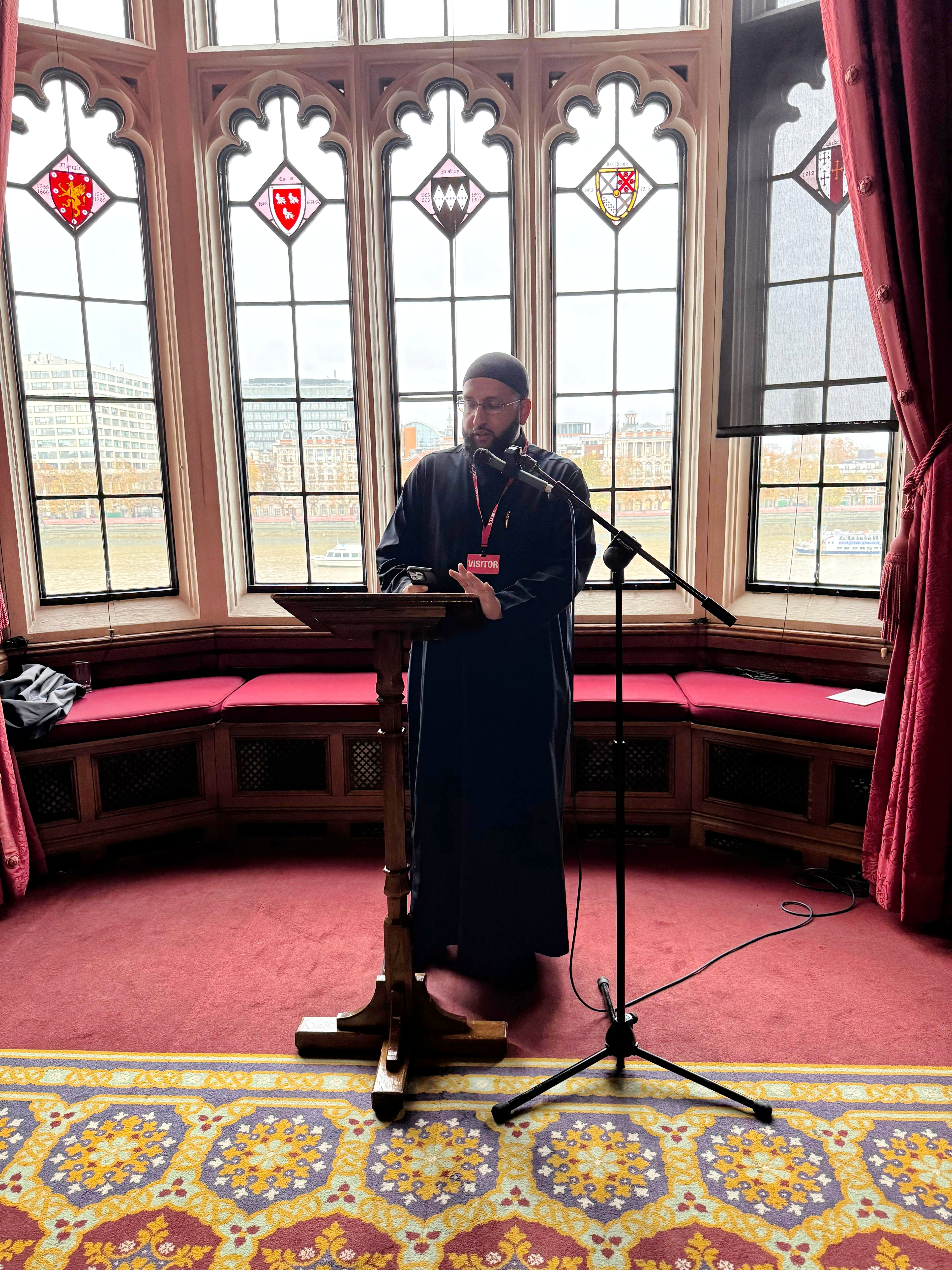
H.E. Ambassador Sheikh Al-Mahfoudh bin Bayyah, Secretary-General of the Abu Dhabi Forum for Peace, travelled to London for the reception and spoke about work that “connects with the heart.” After hearing about the Fountain’s progress—built thus far entirely through volunteered time—he encouraged us to stay in touch and expressed interest in a forthcoming January gathering.
We met leaders and representatives from national remembrance organisations, including the Royal British Legion, to explore alignment around remembrance symbols and educational outreach.
Rear Admiral Amjad Hussain CB—the highest-ranking officer from a minority ethnic background in the British Armed Forces—offered encouragement and support. His career, from Naval Base Commodore Portsmouth to Director (Precision Attack) and Controller of the Navy, exemplifies the very stories the reception sought to foreground.
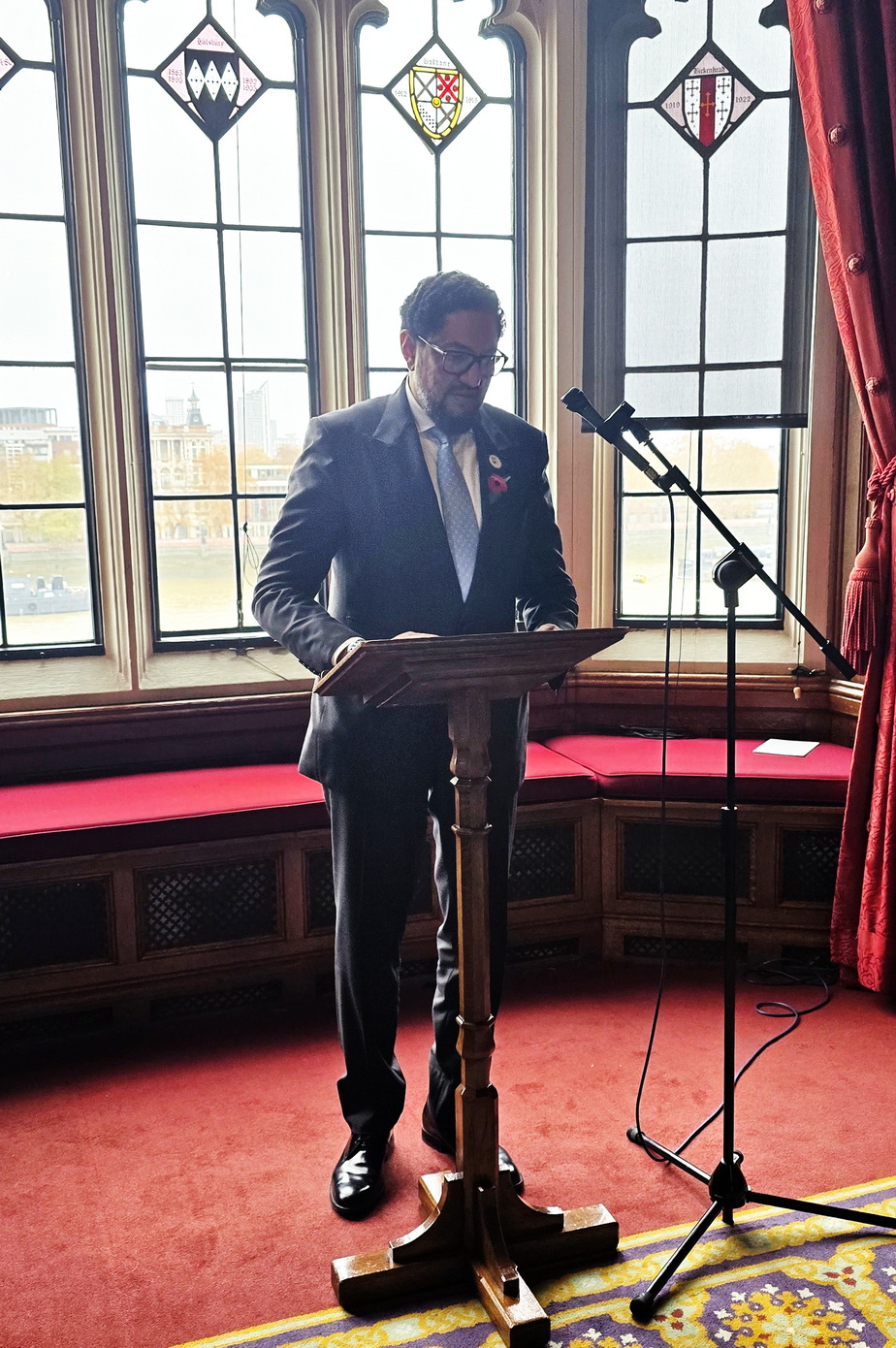 Also a retired Air Marshal and Wing Commander, Dr Rafat Malik from the Royal Air Force to over 20 years in senior leadership roles, Dr. Rafat’s path has been nothing short of extraordinary. We’re beyond excited about the opportunity to collaborate with Dr. Rafat.
Conversations also opened with civic and community figures: Afzal Khan MP (Manchester), Chair Sir William Blackburne, and trustees Mateen Zaki and Shama Husain from World War Muslim Memorials Worldwide, who are excited by the freedom fountain project and want to engage and Bushra Nasir CBE, chair of EQUiP, who urged us to connect around challenging narratives and widening participation.
Artist Arabella Dorman reflected on the portraits at the centre of Great Faith: even when source photos were aged or torn, “the eyes were telling the story” — guiding how she painted courage, loyalty and faith. Her core message resonated with the room: Britain’s wartime armies were richly diverse — Muslim, Christian, Jewish, Hindu, Sikh and others — serving shoulder-to-shoulder; too many of those stories, especially Muslim stories, remain untold.
Lord Russell Rook himself closed by saying to us, “Count me in.”
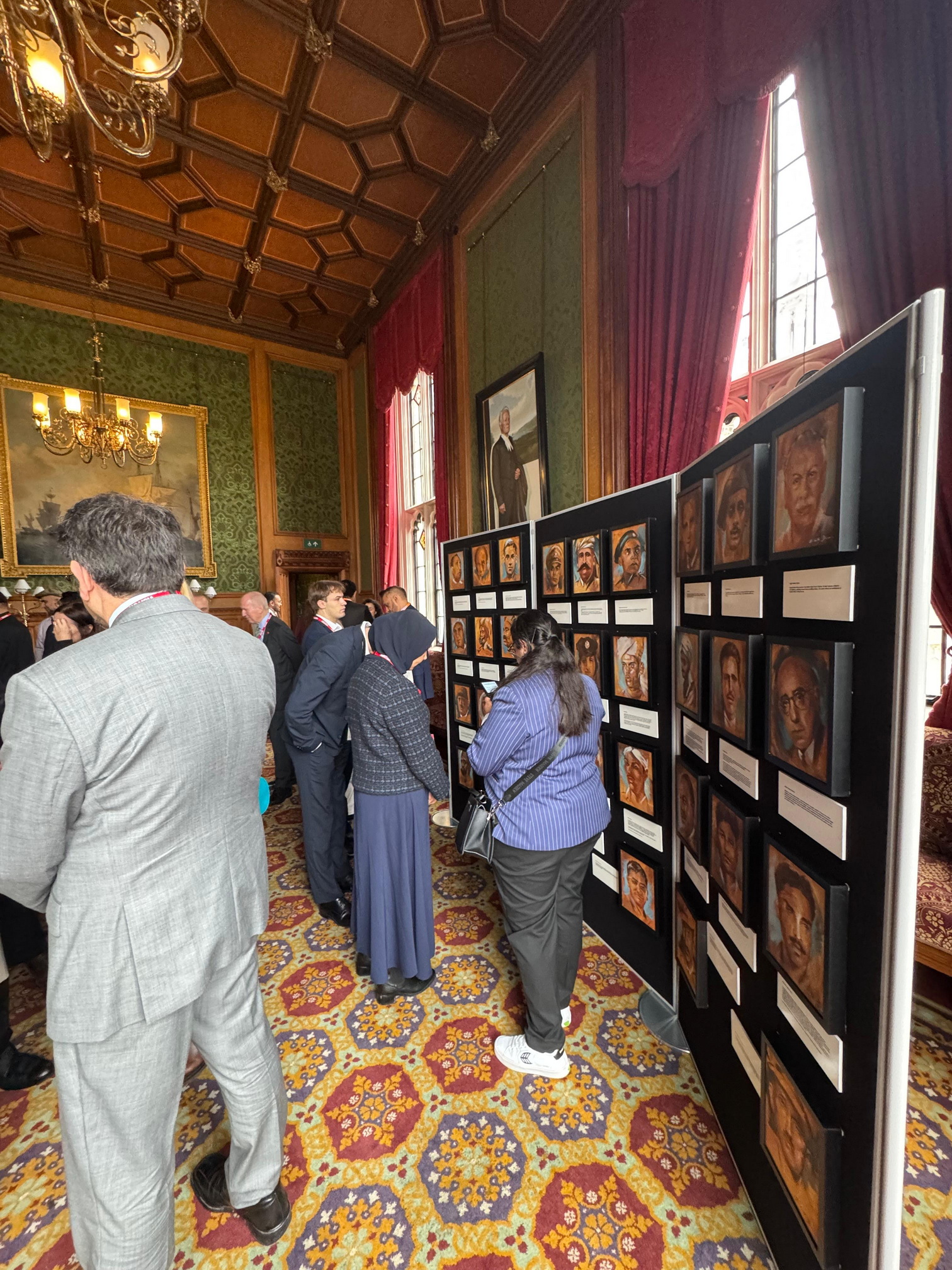
Why it matters
For Freedom Fountain, the day underlined a growing coalition committed to remembrance that unites faiths, histories and generations. We left the River Room energised—grateful to Great Faith for convening such a thoughtful gathering, and confident that the Fountain’s inclusive vision can serve as a shared focal point for partners across the UK and beyond.
What’s next
We leave the House of Lords encouraged and energised. The day affirmed Freedom Fountain’s unique positioning—inclusive by design, built in partnership, and focused on shared remembrance. With new relationships formed and invitations extended, we will follow up with partners from faith, civic, military and cultural spheres to carry this work from the River Room into communities across the country.
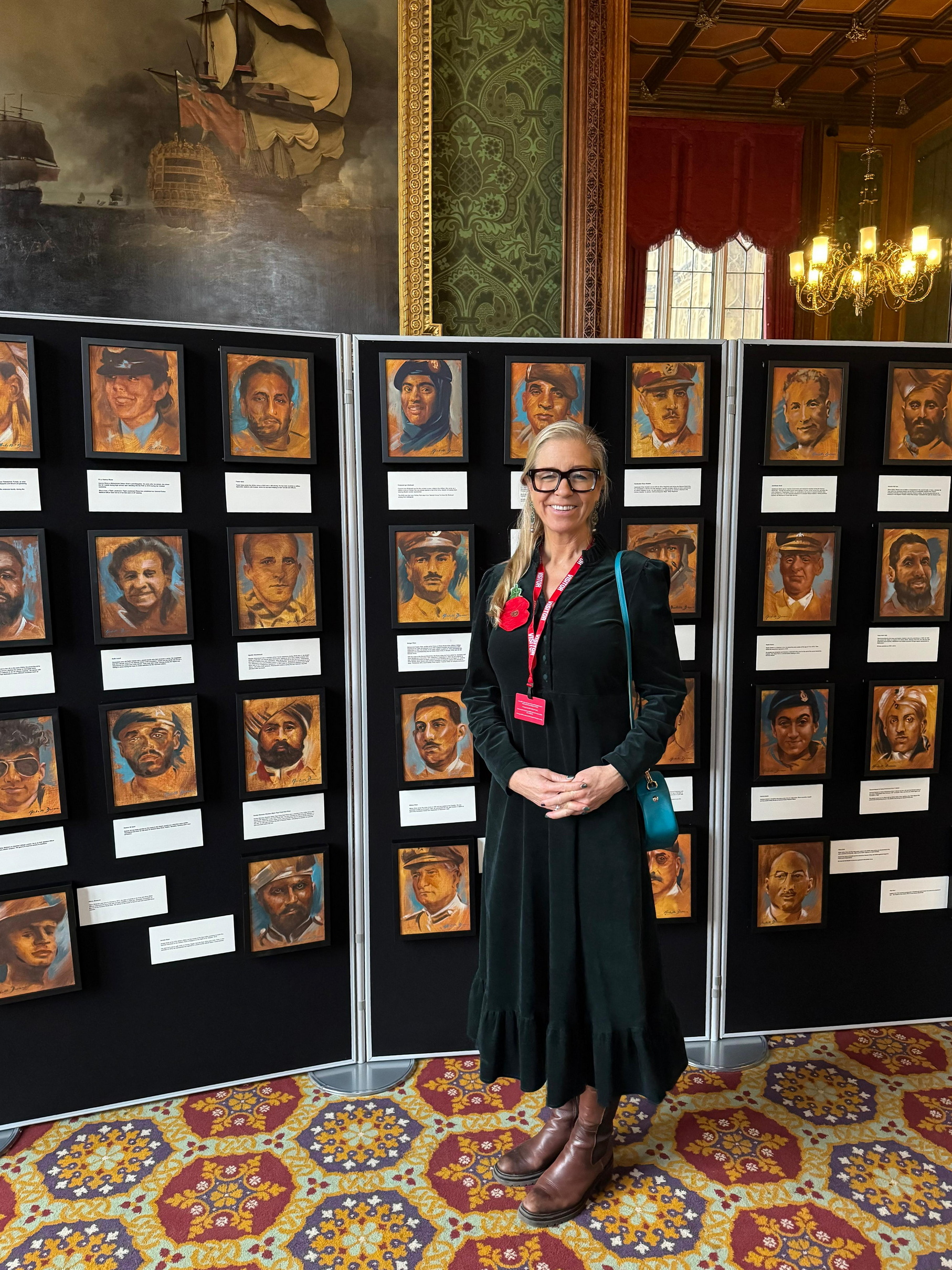
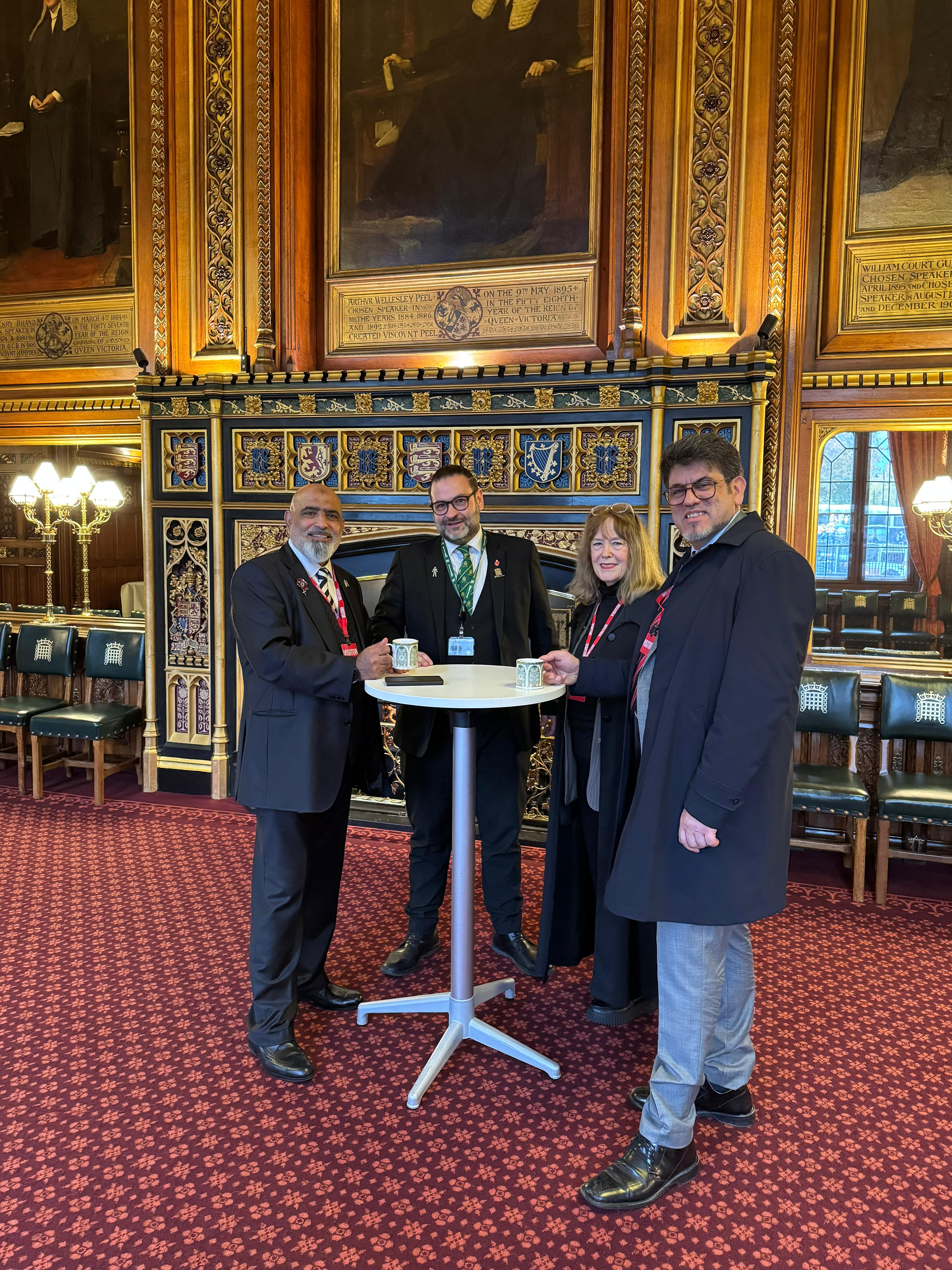
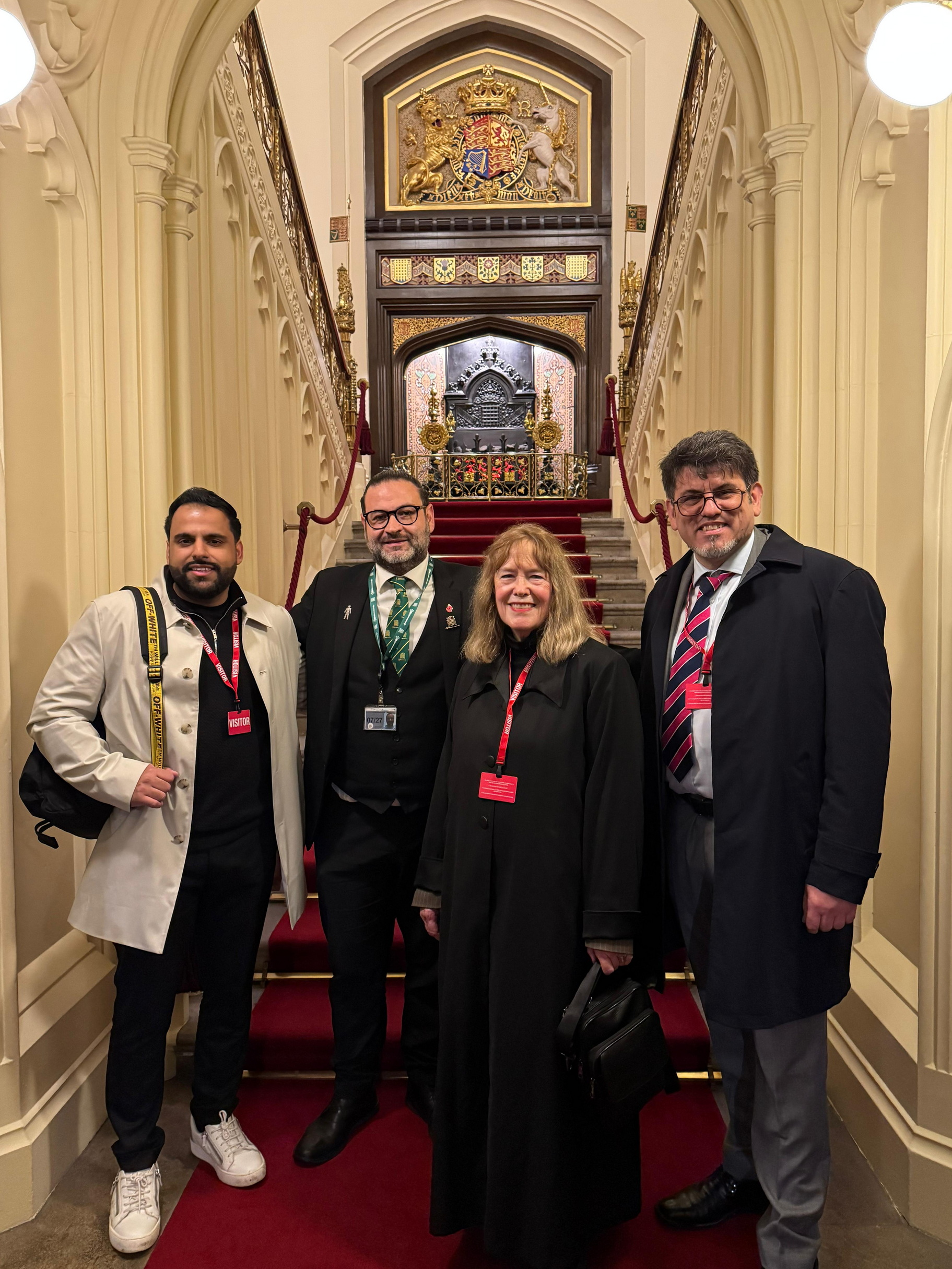
With gratitude to Lord Rook, Nizam Uddin OBE, Arabella Dorman, and all who welcomed us today—and to everyone who shared their time, stories and support.
- Details
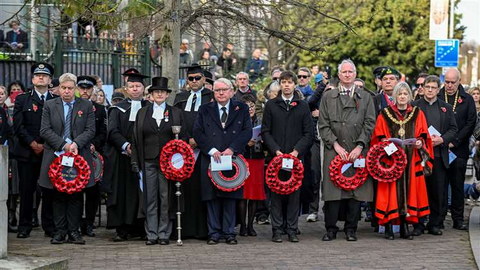
On Sunday 9 November 2025, members of the Freedom Fountain team joined the city’s civic and community leaders for the annual Remembrance Sunday Service on Hills Road, Cambridge — an occasion that brought together residents, veterans, and representatives of the Armed Forces in solemn reflection and unity.
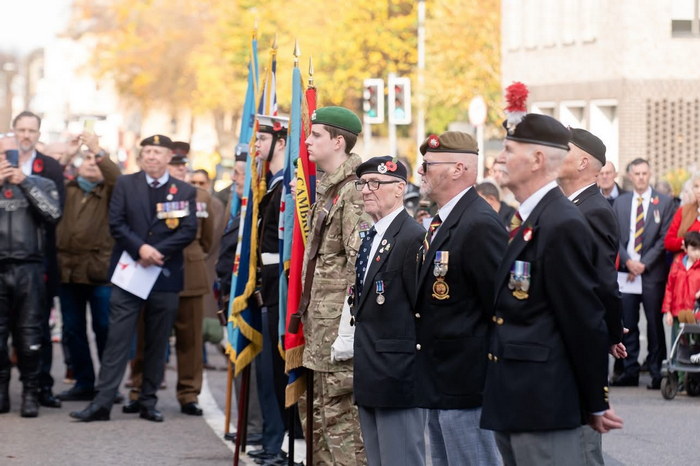
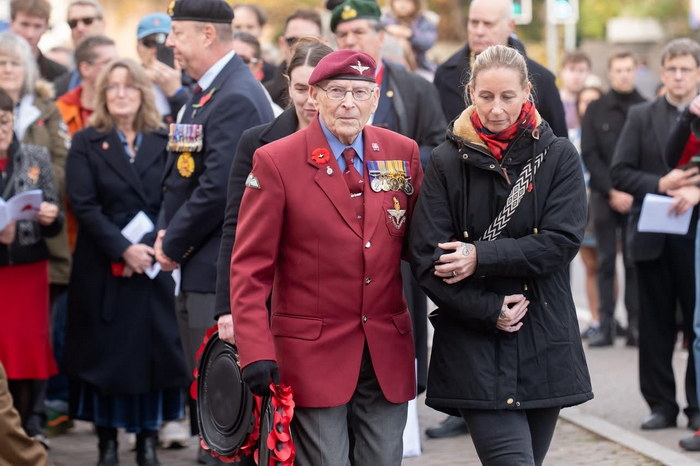
The ceremony, led by Revd Imogen Nay of St Paul’s, Hills Road, began with the traditional march to the war memorial at 10:35 a.m., led by Cllr Russ McPherson on bagpipes and including the Regular and Reserve Armed Forces, Cadets, Scouts, Guides, and veterans. Just before 11 a.m., the city fell silent for two minutes to remember those who gave their lives in service to peace and freedom.
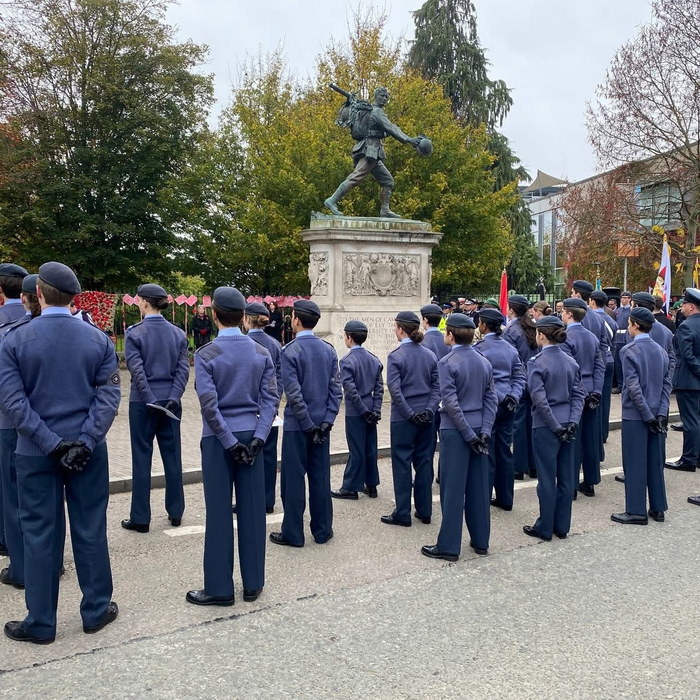
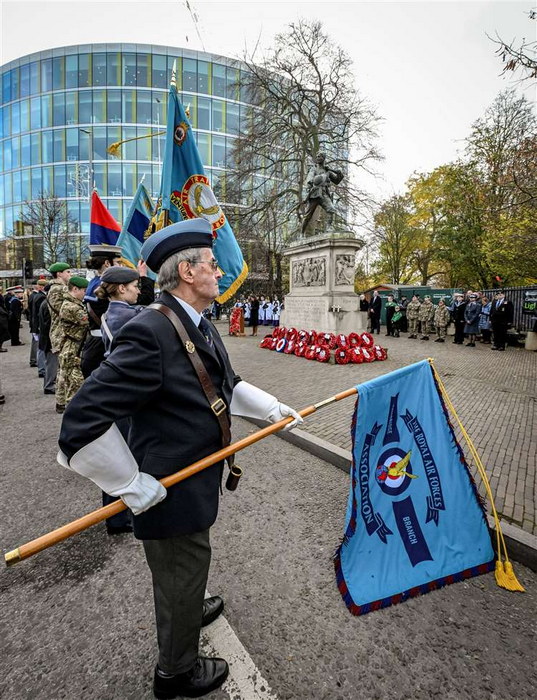
The Mayor of Cambridge, Cllr Diana Pounds, was joined by the Deputy Lieutenant, Mr James Hutt, Daniel Zeichner MP, Cllr Cameron Holloway, Leader of Cambridge City Council, Cllr Peter McDonald, Chair of Cambridgeshire County Council, the Chief Constable Simon Megicks, and representatives from the Royal British Legion, Cambridge University, Anglia Ruskin University, and local faith communities.
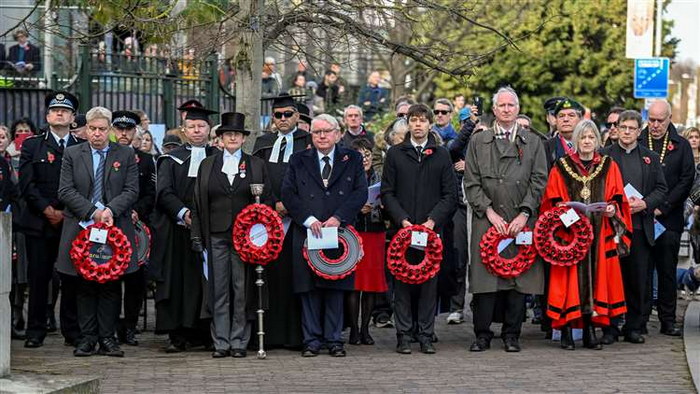
(See full coverage and photos: Cambridge Independent — In Pictures: Cambridge Falls Silent to Remember the Fallen)
Commonwealth Voices and Shared Remembrance
This years’ service held particular significance as part of the 80th anniversary year of the end of the Second World War, following the city’s VJ Day 80 service at Great St Mary’s in August.
Representing the Freedom Fountain Memorial Project, Abdul Kayum Arain, Piero D’Angelico, and Colleen McLaughlin Barlow were among those attending the ceremony on Hills Road, joining civic leaders, veterans, and members of the Armed Forces in remembrance.
At both the August and November services, Rotarian and community leader Mukesh Malhotra BEM BCAv PHF MSc CISM represented the Commonwealth contribution to the World Wars, reading at the VJ80 Commemoration and again on Remembrance Sunday.
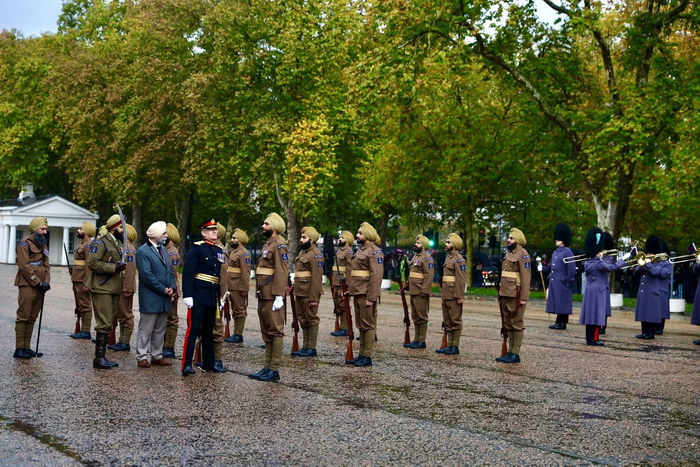
Mukesh’s reading opened: “Today, on this special Remembrance Sunday, we gather in solemn remembrance of all who gave their lives in the service of peace and freedom over the past 80 years since VE and VJ Day. We honour the courage, sacrifice, and steadfast spirit of those who served in times of war and conflict, and we give thanks for the peace they helped secure”.
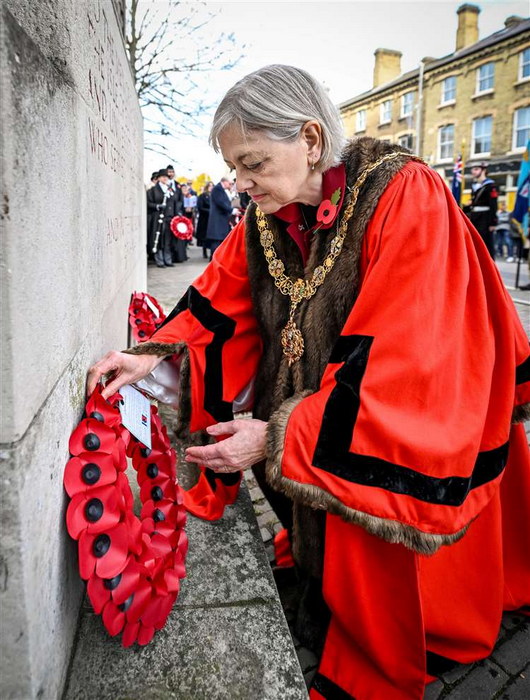
He continued with a Commonwealth Tribute, honouring the men and women who journeyed from across India, the Caribbean, Africa, Canada, Australia, New Zealand, and beyond to serve in the Allied cause. Paying particular tribute to the 2.5 million soldiers of the Indian subcontinent, Mukesh said: “Sikhs, Hindus, Muslims, Christians, and others — standing shoulder to shoulder in courage and loyalty”.
Quoting Nobel Laureate Rabindranath Tagore from Gitanjali, Mukesh concluded: “When I stand before thee at the day’s end, thou shalt see my scars and know that I had my wounds and also my healing”.
These words, echoed across the memorial, resonated with the mission of the Freedom Fountain — a living memorial that will honour the 4 million men of the United British Indian Army, whose courage and humanity transcended borders of faith and region.
Freedom Fountain: Continuing the Legacy of Remembrance
For the Freedom Fountain team, Remembrance Sunday reaffirmed why this memorial — now progressing through its design and planning phase — matters so deeply.
The forthcoming United British Indian Army War Memorial Fountain at Ditchburn Place, Mill Road, will stand as a sustainable and inclusive tribute to those who served. Its bronze Banyan Tree and paisley-shaped pond will symbolise endurance and unity, while its solar-powered water flow will ensure that remembrance continues in harmony with nature.
As outlined in our Design, Heritage, and Access Statement, the memorial honours the shared heritage that connects Cambridge to the Commonwealth — from those who fought in two world wars to those who helped rebuild Britain in peace.
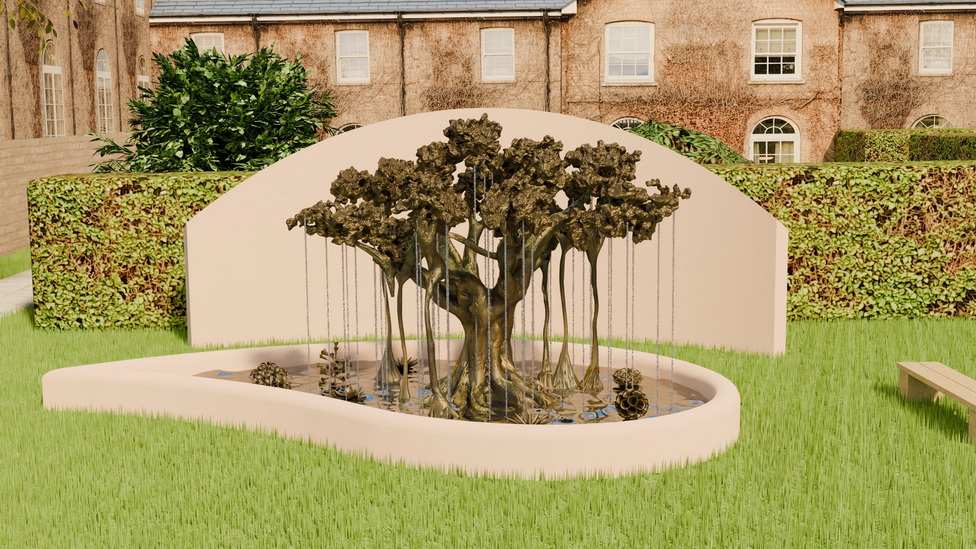
“By fostering unity and remembrance through a shared historical and cultural narrative,” says project co-director Abdul Kayum Arain, “the Freedom Fountain will stand as a symbol of peace, gratitude, and hope for generations to come”.
As the City of Cambridge once again stood still in silence, the team reflected on how remembrance — like the fountain’s water — continues to flow: from the courage of those who served, through the gratitude of those who remember, into the hope of those who will carry the legacy forward.
📸 Explore more images from the day via the Cambridge Independent feature:
Cambridge Falls Silent to Remember the Fallen — In Pictures
- WW2 veteran Capt. Yavar Abbas expresses strong support for the Freedom Fountain initiative
- Great Faith & Freedom Fountain: A meeting of art, remembrance, and shared purpose
- Bridging Nations Through Remembrance: Strengthening UK–Italy Bonds
- Our thanks to everyone who joined us for the first Freedom Fountain gathering